

Similes are sparkling little tools in language that help kids picture things faster and remember ideas longer. A simile compares two different things using the words like or as — for example, “as brave as a lion.” They make sentences livelier, help children describe feelings and objects more clearly, and are perfect for storytelling, writing practice, and everyday talk. Below you’ll find the best similes for kids — simple, memorable, and ready to use in class, at home, or in text messages.
As brave as a lion
Meaning: Extremely brave or fearless.
Tone: Bold, heroic, positive.
Best used when: Praising courage, describing a child who tried something scary (like the first day at school or a dentist visit).
Examples:
- Mia faced the big slide and climbed it — she was as brave as a lion.
- When the lights went out, Tom stayed calm and was as brave as a lion.
- The firefighter rescued the kitten — as brave as a lion, he ran into the smoke.
Texting / Daily-use:
- “You did great at your recital — as brave as a lion!”
- “Don’t worry, you’ll be brave as a lion tomorrow.”
As busy as a bee
Meaning: Very active and hardworking.
Tone: Energetic, cheerful.
Best used when: Describing someone doing many tasks or buzzing around with purpose.
Examples:
- Emma was as busy as a bee making crafts for the fair.
- The classroom was as busy as a bee the morning of the project.
- Dad was as busy as a bee fixing the bike.
Texting / Daily-use:
- “Homework time! Be as busy as a bee 🐝”
- “You cleaned your room? Busy as a bee today!”
As cool as a cucumber
Meaning: Very calm, not nervous.
Tone: Relaxed, slightly humorous.
Best used when: Describing someone who stays calm under pressure (tests, performances).
Examples:
- On stage, Lily was as cool as a cucumber.
- Even during the surprise quiz, Jake stayed as cool as a cucumber.
- Mom stayed as cool as a cucumber when the car wouldn’t start.
Texting / Daily-use:
- “Try to stay as cool as a cucumber during the game.”
- “Breathe and be cool as a cucumber — you’ve got this!”
As bright as a button
Meaning: Very clever or cheerful.
Tone: Sweet, complimentary.
Best used when: Praising a child’s quick thinking or sunny personality.
Examples:
- Sarah solved the puzzle quickly — as bright as a button.
- His smile is as bright as a button every morning.
- Little Leo is as bright as a button with his counting.
Texting / Daily-use:
- “Test went well? That’s my bright as a button kid!”
- “You shined today — bright as a button ✨”
As gentle as a lamb
Meaning: Very gentle, kind, and soft.
Tone: Tender, affectionate.
Best used when: Describing caring actions, handling pets, or comfort-giving moments.
Examples:
- She held the bunny as gentle as a lamb.
- When calming his sister, Ben spoke as gentle as a lamb.
- The nurse treated the wound as gentle as a lamb.
Texting / Daily-use:
- “Be gentle with the kitten — as gentle as a lamb.”
- “You tucked him in so nicely, as gentle as a lamb.”
As happy as a clam
Meaning: Very happy and content.
Tone: Joyful, lighthearted.
Best used when: Describing delight after a good event (playdate, gift, holiday).
Examples:
- After ice cream, Nora felt as happy as a clam.
- They were as happy as clams at the picnic.
- Finding his lost toy made Sam as happy as a clam.
Texting / Daily-use:
- “Got a sticker! I’m as happy as a clam 😄”
- “Saw your drawing — you must be happy as a clam!”
As quiet as a mouse
Meaning: Very quiet and soft-spoken.
Tone: Playful, soft.
Best used when: Asking kids to be silent or describe someone tiptoeing.
Examples:
- During the nap time, the classroom was as quiet as a mouse.
- Sneaking a surprise, Anna moved as quiet as a mouse.
- He whispered the secret, as quiet as a mouse.
Texting / Daily-use:
- “Shh — be as quiet as a mouse while Dad sleeps.”
- “You snuck in the cake? Quiet as a mouse 😄”
As quick as a wink

Meaning: Very fast or immediate.
Tone: Fun, lively.
Best used when: Describing quick actions, fast reflexes, or sudden changes.
Examples:
- The rabbit was gone as quick as a wink.
- He finished the puzzle as quick as a wink.
- The weather changed as quick as a wink from sunny to rainy.
Texting / Daily-use:
- “Be back as quick as a wink — grabbing snacks.”
- “Finish your chores as quick as a wink and then play!”
As light as a feather
Meaning: Very light in weight or gentle in feeling.
Tone: Soothing, descriptive.
Best used when: Describing soft objects, gentle touches, or easy tasks.
Examples:
- The scarf floated as light as a feather in the breeze.
- Her touch was as light as a feather on the bandage.
- The balloon felt as light as a feather in his hand.
Texting / Daily-use:
- “Hold the balloon — it’s as light as a feather!”
- “Your nap was peaceful, as light as a feather.”
As stubborn as a mule
Meaning: Very stubborn and unwilling to change.
Tone: Playful but cautionary.
Best used when: Pointing out stubborn behavior or encouraging flexibility.
Examples:
- When Max refused to wear the hat, he was as stubborn as a mule.
- The toy jammed, and he was as stubborn as a mule to fix it his way.
- Don’t be as stubborn as a mule — try a new idea.
Texting / Daily-use:
- “If you act like a mule, no extra screen time!”
- “Don’t be stubborn as a mule — help me choose.”
As wise as an owl
Meaning: Very wise or thoughtful.
Tone: Respectful, admiring.
Best used when: Praising thoughtful decisions or giving advice in stories.
Examples:
- Grandma gives the best advice — she’s as wise as an owl.
- Think before you act, and you’ll be as wise as an owl.
- The teacher’s answer was as wise as an owl.
Texting / Daily-use:
- “You picked the right move — wise as an owl!”
- “Thanks for the tip — you’re as wise as an owl.”
As playful as a kitten
Meaning: Full of playful energy and curiosity.
Tone: Cute, lively.
Best used when: Describing energetic play, curiosity, or affectionate mischief.
Examples:
- The puppy chased the string as playful as a kitten.
- She explored the backyard as playful as a kitten.
- He batted at the toy as playful as a kitten.
Texting / Daily-use:
- “You were playful as a kitten at the park!”
- “Time for fun — be playful as a kitten 🐱”
As strong as an ox
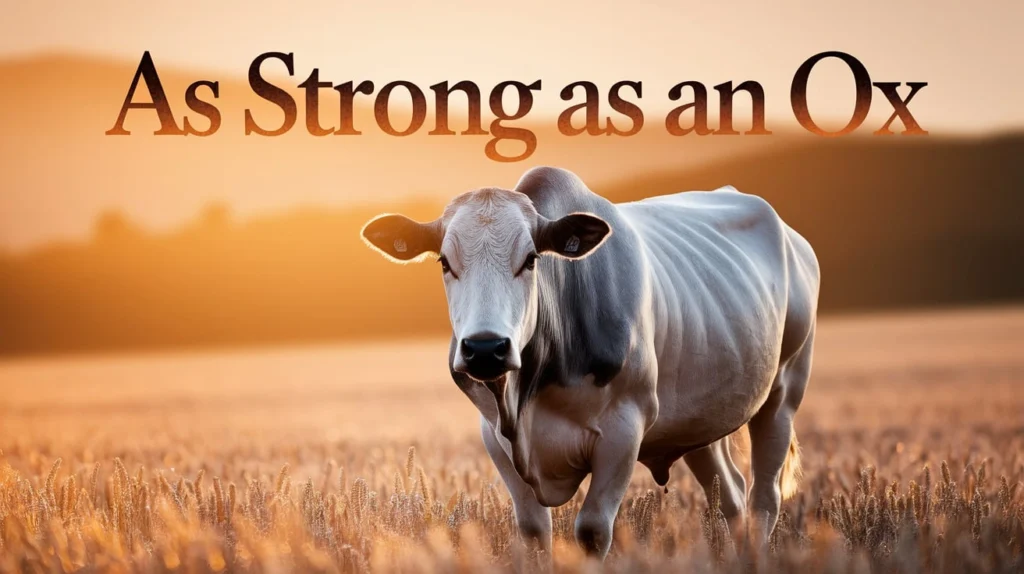
Meaning: Very strong and powerful.
Tone: Praiseful, admiring.
Best used when: Complimenting effort, lifting heavy items, or sports.
Examples:
- He lifted the boxes as strong as an ox.
- After practice, she ran like as strong as an ox.
- Dad fixed the fence — as strong as an ox.
Texting / Daily-use:
- “You carried that backpack like you’re as strong as an ox!”
- “Good job moving the table — strong as an ox 💪”
As neat as a pin
Meaning: Very tidy and well-organized.
Tone: Positive, encouraging.
Best used when: Praising cleanliness, organizing, or careful work.
Examples:
- His desk was as neat as a pin after cleanup.
- She folded the clothes as neat as a pin.
- The classroom looked as neat as a pin for inspection day.
Texting / Daily-use:
- “Room tidy? Make it as neat as a pin.”
- “Wow — your pencil case is neat as a pin!”
As sweet as honey
Meaning: Very kind, pleasant, or delightful.
Tone: Warm, affectionate.
Best used when: Complimenting kindness, charm, or tasty things.
Examples:
- Grandma’s cookies are as sweet as honey.
- He said thank you with a smile as sweet as honey.
- That compliment felt as sweet as honey.
Texting / Daily-use:
- “Thanks for the gift — that was as sweet as honey!”
- “You were helpful today, sweet as honey 🍯”
Quick Texting Examples (Short & Friendly)
- “Be brave today — as brave as a lion!”
- “Homework done? You’re as busy as a bee!”
- “Calm down, breathe — cool as a cucumber.”
- “You finished fast — as quick as a wink!”
Short texts like these are perfect for encouraging kids and keeping language playful while building simile vocabulary.
Everyday Sentences to Practice
Use similes in routine moments to boost learning:
- Morning: “Wake up as bright as a button!”
- On the way to school: “Stay as quiet as a mouse on the bus.”
- After chores: “Great job — you were as neat as a pin.”
Short, repeated uses help children internalize similes and improve creative writing skills.
How to Teach Similes to Kids (Simple Steps)
- Show & Tell: Give an image (lion, bee, feather) and the simile that fits.
- Play Games: Have kids match similes to pictures or act them out.
- Write Together: Create short sentences and let children replace literal phrases with similes.
- Text Practice: Encourage one-line texts using a simile a day.
- Praise & Use: Reward creativity and use similes in everyday talk.
These small steps make similes memorable and fun.
Conclusion
Using the best similes for kids turns ordinary sentences into bright, memorable images. Similes build vocabulary, sharpen imagination, and make writing and speech more colorful. Try one simile a day—text it, say it at breakfast, or slip it into a bedtime story. Over time, kids will not only understand figurative language but also enjoy the creative power of comparison. Keep it simple, playful, and encouraging — and watch language learning sparkle.