
Sadness is a feeling everyone experiences, yet it can be hard to put into words. That’s where similes come in. A simile is a figure of speech that compares one thing to another using “like” or “as.”
Sad Like a Rainy Day
Meaning: This simile compares sadness to a gloomy, rainy day, often associated with low energy and quiet disappointment.
Tone: Gentle, reflective, and calm.
Best Usage Context: Perfect for emotional writing, diaries, poems, or soft storytelling.
Example Sentences:
- She felt sad like a rainy day when her best friend moved away.
- His voice sounded sad like a rainy day without sunshine.
- The house felt sad like a rainy day after everyone left.
Daily-Use / Texting Example:
- “I don’t know why, but I’m feeling sad like a rainy day today.”
Sad Like a Broken Toy
Meaning: This simile shows sadness as something damaged, once joyful but now unable to bring happiness.
Tone: Innocent, emotional, and slightly nostalgic.
Best Usage Context: Great for kids’ writing, storytelling, and emotional reflection.
Example Sentences:
- He looked sad like a broken toy left in the corner.
- Her smile faded, sad like a broken toy no one plays with anymore.
- The memory made him feel sad like a broken toy from childhood.
Daily-Use / Texting Example:
- “I feel sad like a broken toy today.”
Sad Like a Lonely Cloud

Meaning: This simile compares sadness to a single cloud drifting alone, symbolizing isolation.
Tone: Soft, poetic, and emotional.
Best Usage Context: Ideal for poems, descriptive writing, and emotional scenes.
Example Sentences:
- She felt sad like a lonely cloud in the empty sky.
- His thoughts drifted, sad like a lonely cloud with nowhere to go.
- The child stood quietly, sad like a lonely cloud.
Daily-Use / Texting Example:
- “Feeling sad like a lonely cloud tonight.”
Sad Like an Empty Room
Meaning: This simile describes sadness as emptiness, silence, and absence.
Tone: Deep, reflective, and serious.
Best Usage Context: Best for mature writing, emotional narratives, or personal reflections.
Example Sentences:
- After she left, he felt sad like an empty room.
- The house seemed sad like an empty room without laughter.
- His heart felt sad like an empty room echoing with memories.
Daily-Use / Texting Example:
- “Everything feels sad like an empty room today.”
Sad Like a Wilting Flower
Meaning: This simile compares sadness to a flower losing life and color.
Tone: Emotional, gentle, and visual.
Best Usage Context: Excellent for descriptive writing, poetry, and emotional expression.
Example Sentences:
- She looked sad like a wilting flower in the sun.
- His hope faded, sad like a wilting flower without water.
- The news left her sad like a wilting flower.
Daily-Use / Texting Example:
- “I’m feeling sad like a wilting flower lately.”
Sad Like a Lost Puppy
Meaning: This simile shows sadness as confusion and helplessness.
Tone: Sympathetic and emotional.
Best Usage Context: Useful in stories, emotional scenes, or child-friendly writing.
Example Sentences:
- He stood there sad like a lost puppy.
- She felt sad like a lost puppy searching for comfort.
- The child cried, sad like a lost puppy in the rain.
Daily-Use / Texting Example:
- “Feeling sad like a lost puppy right now.”
Sad Like a Song Without Music

Meaning: This simile suggests sadness as something incomplete or hollow.
Tone: Poetic and thoughtful.
Best Usage Context: Great for creative writing, essays, and emotional reflections.
Example Sentences:
- Life felt sad like a song without music.
- His days passed, sad like a song without music.
- The moment was sad like a song without music.
Daily-Use / Texting Example:
- “Today feels sad like a song without music.”
Sad Like a Faded Photograph
Meaning: This simile compares sadness to memories losing their brightness.
Tone: Nostalgic and emotional.
Best Usage Context: Perfect for reflective writing and emotional storytelling.
Example Sentences:
- The memory felt sad like a faded photograph.
- Her smile looked sad like a faded photograph.
- He held onto moments sad like faded photographs.
Daily-Use / Texting Example:
- “Feeling sad like a faded photograph today.”
Sad Like a Quiet Goodbye
Meaning: This simile represents sadness as a silent farewell.
Tone: Soft, emotional, and serious.
Best Usage Context: Ideal for emotional scenes, letters, or storytelling.
Example Sentences:
- The moment felt sad like a quiet goodbye.
- His wave was sad like a quiet goodbye.
- The ending was sad like a quiet goodbye.
Daily-Use / Texting Example:
- “It feels sad like a quiet goodbye.”
Sad Like a Candle Blown Out
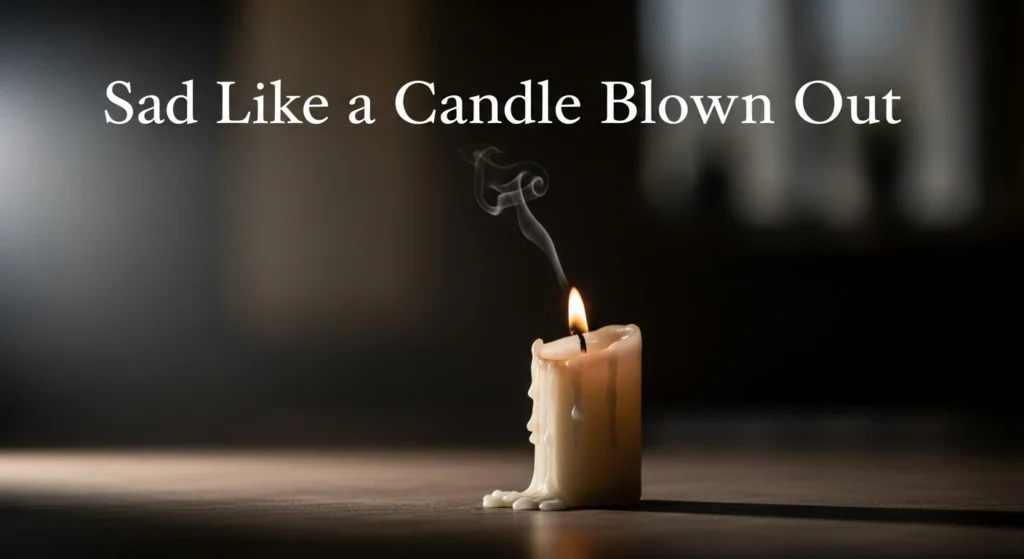
Meaning: This simile shows sadness as sudden loss or fading hope.
Tone: Dramatic yet gentle.
Best Usage Context: Useful in poems, stories, and emotional descriptions.
Example Sentences:
- Her happiness vanished, sad like a candle blown out.
- The news left him sad like a candle blown out.
- His dreams felt sad like a candle blown out too soon.
Daily-Use / Texting Example:
- “I feel sad like a candle blown out.”
Sad Like a Heavy Sky Before a Storm
Meaning: This simile compares sadness to emotional heaviness and tension.
Tone: Intense and emotional.
Best Usage Context: Great for dramatic writing and emotional buildup.
Example Sentences:
- He felt sad like a heavy sky before a storm.
- The silence was sad like a heavy sky before rain.
- Her heart felt sad like a heavy sky before a storm.
Daily-Use / Texting Example:
- “Mood feels sad like a heavy sky today.”
Sad Like Tears That Won’t Fall
Meaning: This simile describes hidden or controlled sadness.
Tone: Deep and emotional.
Best Usage Context: Perfect for inner monologues and emotional writing.
Example Sentences:
- She felt sad like tears that won’t fall.
- His eyes looked sad like tears that won’t fall.
- The pain stayed sad like tears that won’t fall.
Daily-Use / Texting Example:
- “Feeling sad like tears that won’t fall.”
Sad Like an Unfinished Story

Meaning: This simile shows sadness caused by lack of closure.
Tone: Thoughtful and reflective.
Best Usage Context: Ideal for emotional essays and storytelling.
Example Sentences:
- Their relationship felt sad like an unfinished story.
- The ending was sad like an unfinished story.
- He lived with regret, sad like an unfinished story.
Daily-Use / Texting Example:
- “Feels sad like an unfinished story.”
Sad Like a Shadow at Sunset
Meaning: This simile compares sadness to something slowly fading yet present.
Tone: Poetic and calm.
Best Usage Context: Excellent for descriptive and emotional writing.
Example Sentences:
- She felt sad like a shadow at sunset.
- His joy faded, sad like a shadow at sunset.
- The day ended sad like a shadow at sunset.
Daily-Use / Texting Example:
- “Feeling sad like a shadow at sunset.”
Sad Like a Heart Missing a Beat
Meaning: This simile shows sadness as emotional shock or loss.
Tone: Strong, emotional, and dramatic.
Best Usage Context: Great for expressive writing and emotional moments.
Example Sentences:
- He felt sad like a heart missing a beat.
- The message left her sad like a heart missing a beat.
- The moment passed, sad like a heart missing a beat.
Final Thoughts:
Sadness is a complex emotion, but similes help turn those feelings into clear, relatable images. By using similes for being sad, you add depth, emotion, and creativity to your writing and conversations. These comparisons make feelings easier to share and easier for others to understand.