
Books are more than paper and ink. They carry emotions, knowledge, imagination, and escape. Writers often use similes to describe books in a vivid and engaging way. A simile compares two different things using the words “like” or “as” to make descriptions more colorful and meaningful.
When you say, “This book is like a doorway to another world,” you are helping readers visualize the experience of reading in a relatable way. That is the power of similes.
In this guide, you’ll discover 30 powerful similes for books, each explained clearly with meaning, tone, usage context, and natural examples. These similes are perfect for creative writing, essays, storytelling, blogging, and daily conversation.
Let’s explore how similes can make your descriptions of books more expressive and memorable.
Books are like windows to the world
Meaning: Books allow readers to see beyond their surroundings and understand different cultures, ideas, and experiences.
Tone: Inspirational, thoughtful
Best Usage: Essays, educational content, reflective writing
Examples:
- Books are like windows to the world, letting us see places we’ve never visited.
- For her, novels were windows to the world beyond her small town.
- History books act like windows to the past.
Books are like doors to imagination
Meaning: Reading opens pathways to creative and imaginary worlds.
Tone: Imaginative, uplifting
Best Usage: Storytelling, children’s writing, creative blogs
Examples:
- Fantasy novels are like doors to imagination.
- Each page felt like opening a new door to imagination.
- Books for children are doors to colorful imaginary lands.
Books are like silent teachers
Meaning: Books teach without speaking aloud.
Tone: Respectful, educational
Best Usage: Academic writing, motivational content
Examples:
- Books are like silent teachers guiding us patiently.
- A good biography acts like a silent teacher of life lessons.
- Textbooks serve as silent teachers in every classroom.
Books are like trusted friends
Meaning: Books provide comfort, companionship, and reliability.
Tone: Warm, emotional
Best Usage: Personal blogs, reflective essays
Examples:
- During lonely days, books were like trusted friends.
- Her favorite novel felt like an old trusted friend.
- Books stay with us like friends who never leave.
Books are like treasure chests
Meaning: Books hold valuable knowledge and insights.
Tone: Curious, valuable
Best Usage: Educational content, persuasive writing
Examples:
- Libraries are treasure chests filled with books.
- Each chapter opened like a treasure chest of wisdom.
- Classic literature is a treasure chest of timeless ideas.
Books are like time machines
Meaning: Books take readers to different eras and moments in history.
Tone: Adventurous, historical
Best Usage: History writing, storytelling
Examples:
- Historical novels are like time machines.
- This book felt like a time machine to ancient Rome.
- Reading memoirs is like traveling in a time machine.
Books are like maps for the mind
Meaning: Books guide thoughts and understanding.
Tone: Intellectual
Best Usage: Academic and philosophical writing
Examples:
- Self-help books are maps for the mind.
- This guidebook acted like a map for my thoughts.
- Books provide direction like maps for the mind.
Books are like seeds of knowledge
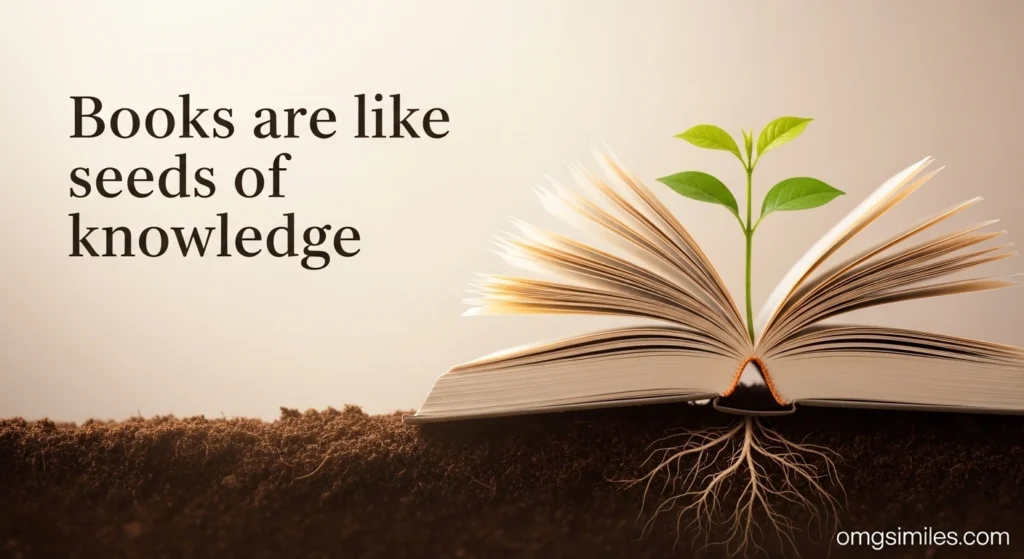
Meaning: Books plant ideas that grow over time.
Tone: Motivational
Best Usage: Educational blogs, speeches
Examples:
- Books plant seeds of knowledge in young minds.
- That novel planted seeds of curiosity in her.
- Reading daily sows seeds of knowledge.
Books are like lanterns in the dark
Meaning: Books provide guidance during confusion or hardship.
Tone: Hopeful
Best Usage: Inspirational writing
Examples:
- Books are lanterns in the dark during tough times.
- That self-help book acted like a lantern in the dark.
- Philosophy books are lanterns during mental confusion.
Books are like mirrors of society
Meaning: Books reflect real social issues and realities.
Tone: Reflective, serious
Best Usage: Social commentary, essays
Examples:
- Novels often act like mirrors of society.
- This story is a mirror of society’s problems.
- Books reflect reality like mirrors.
Books are like oceans of ideas
Meaning: Books contain deep and vast knowledge.
Tone: Grand, descriptive
Best Usage: Academic, descriptive writing
Examples:
- Encyclopedias are oceans of ideas.
- That library felt like an ocean of ideas.
- Books contain oceans of information.
Books are like keys to wisdom
Meaning: Books unlock understanding and intelligence.
Tone: Inspirational
Best Usage: Educational, motivational
Examples:
- Books are keys to wisdom.
- Reading daily gives you keys to wisdom.
- Philosophy books act like keys to deep thinking.
Books are like gardens of thoughts
Meaning: Books grow many different ideas and reflections. Tone: Poetic Best Usage: Creative writing
Examples:
- Poetry books are gardens of thoughts.
- That novel was a garden of creative ideas.
- Books allow thoughts to bloom like gardens.
Books are like bridges to new perspectives
Meaning: Books connect readers to different viewpoints.
Tone: Thoughtful
Best Usage: Essays, debates
Examples:
- Books act like bridges to new perspectives.
- Reading biographies builds bridges to new perspectives.
- Books connect minds like bridges.
Books are like puzzles waiting to be solved
Meaning: Books challenge the mind and invite interpretation.
Tone: Curious
Best Usage: Mystery, analytical writing
Examples:
- Mystery novels are puzzles waiting to be solved.
- That book felt like a puzzle for my mind.
- Some books challenge us like puzzles.
Books are like rivers of stories
Meaning: Books flow with continuous narratives and emotions.
Tone: Poetic
Best Usage: Storytelling
Examples:
- Storybooks are rivers of stories.
- Each chapter flowed like a river of stories.
- Books carry stories like rivers carry water.
Books are like anchors for the soul
Meaning: Books provide stability and grounding.
Tone: Emotional, calming
Best Usage: Reflective writing
Examples:
- Books are anchors for the soul during stress.
- That novel felt like an anchor for my emotions.
- Reading keeps the soul steady like an anchor.
Books are like clouds of creativity
Meaning: Books inspire creative thinking.
Tone: Imaginative
Best Usage: Creative blogs
Examples:
- Fantasy books are clouds of creativity.
- Books inspire ideas like clouds form shapes.
- Reading fills the mind with clouds of creativity.
Books are like candles of learning
Meaning: Books spread light and knowledge slowly and steadily.
Tone: Inspirational
Best Usage: Educational content
Examples:
- Books are candles of learning in dark times.
- That textbook acted like a candle of learning.
- Books light the mind like candles.
Books are like recipes for the mind
Meaning: Books combine ideas to create understanding.
Tone: Creative, playful
Best Usage: Informal writing
Examples:
- Self-help books are recipes for the mind.
- This book mixed ideas like a recipe.
- Books teach us through recipes of thought.
Books are like mountains of wisdom
Meaning: Books hold massive amounts of valuable information.
Tone: Grand, respectful
Best Usage: Academic writing
Examples:
- Ancient scriptures are mountains of wisdom.
- That encyclopedia felt like a mountain of wisdom.
- Books contain wisdom like mountains contain rock.
Books are like stars in the night
Meaning: Books guide and inspire when life feels dark.
Tone: Hopeful, poetic
Best Usage: Inspirational content
Examples:
- Books are stars in the night of confusion.
- That novel shone like a star in my life.
- Books guide readers like stars guide travelers.
Books are like medicine for the mind
Meaning: Reading heals stress and anxiety.
Tone: Soothing
Best Usage: Wellness blogs
Examples:
- Books are medicine for the mind after a long day.
- Reading acted like medicine for my thoughts.
- Books heal the mind like medicine heals the body.
Books are like storytellers without voices
Meaning: Books narrate stories silently.
Tone: Reflective
Best Usage: Literary writing
Examples:
- Books are storytellers without voices.
- That novel narrated silently like a storyteller.
- Books speak without making a sound.
Books are like ladders to success
Meaning: Books help people grow and achieve goals.
Tone: Motivational
Best Usage: Self-improvement content
Examples:
- Books are ladders to success in education.
- That guidebook acted like a ladder to success.
- Reading daily builds ladders toward goals.
Books are like blankets of comfort
Meaning: Books provide warmth and emotional comfort.
Tone: Warm, emotional
Best Usage: Personal writing
Examples:
- Books are blankets of comfort on lonely nights.
- That novel wrapped me like a blanket of comfort.
- Reading felt like being covered with comfort.
Books are like compasses for life
Meaning: Books help guide decisions and direction.
Tone: Wise
Best Usage: Philosophical writing
Examples:
- Books are compasses for life choices.
- That memoir acted like a compass for my career.
- Books guide us like compasses.
Books are like playgrounds for the mind
Meaning: Books allow mental exploration and fun.
Tone: Playful
Best Usage: Children’s content, creative writing
Examples:
- Storybooks are playgrounds for the mind.
- That fantasy novel was a playground of imagination.
- Books let the mind play freely.
Books are like photographs of history
Meaning: Books capture historical moments vividly.
Tone: Historical
Best Usage: History essays
Examples:
- History books are photographs of the past.
- That memoir felt like a photograph of history.
- Books preserve history like photographs.
Books are like rain for dry minds
Meaning: Books refresh and energize thinking.
Tone: Refreshing
Best Usage: Motivational content
Examples:
- Books are rain for dry minds.
- That novel refreshed me like rain.
- Reading is like rain after a drought.
Books are like candles in a storm
Meaning: Books offer calm and hope during chaos.
Tone: Hopeful
Best Usage: Inspirational writing
Examples:
- Books are candles in a storm of confusion.
- That story stayed steady like a candle in a storm.
- Books provide calm like candles.
Daily-Use Sentences and Texting Examples
You can use these similes casually in messages:
- “This novel is like a window to the world 🌍”
- “Books are my blanket of comfort after exams.”
- “Reading feels like rain for my dry mind.”
- “That biography is a time machine!”
Conclusion
Using similes for books adds beauty, depth, and clarity to your writing. These comparisons help readers visualize, feel, and connect with the idea of reading in powerful ways. Whether you’re writing essays, stories, captions, or blogs, similes make your language more vivid and memorable.
Books already hold magic. With similes, you give words the power to share that magic with others.
FAQs
What is a simile for books?
A simile for books compares books to something else using “like” or “as” to create vivid imagery.
Why use similes when describing books?
Similes make descriptions more engaging, creative, and easier to understand.
Can similes improve creative writing?
Yes, similes add depth and imagination to storytelling and essays.
Are similes useful for students?
Absolutely. They improve writing skills and make essays more expressive.
Can I use these similes in daily conversation?
Yes, they are simple and natural for everyday use.
Do similes help in SEO content writing?
Yes, engaging language improves readability and dwell time.
Which simile is best for books?
It depends on context, but “books are like windows to the world” is very popular.