
Stress is something everyone experiences. Sometimes it feels heavy, sometimes fast, and sometimes invisible but powerful. Writers, students, and content creators often struggle to explain stress in a vivid way. This is where similes help.
A simile is a figure of speech that compares two different things using words like “like” or “as.” Similes make writing more expressive, emotional, and relatable. Instead of saying “I am stressed,” you can say “I am stressed like a tight rope ready to snap.” This instantly creates imagery.
Similes for stress are commonly used in storytelling, blogging, journaling, academic writing, poetry, and everyday conversations. They help readers feel emotions rather than just read them.
In this article, you will discover powerful similes for stress, their meanings, tone, usage context, and natural examples to improve your writing.
Stressed like a ticking time bomb
Meaning: Stress building quietly and ready to explode.
Tone: Intense, dramatic
Best usage: Deadlines, emotional pressure, workplace stress
Examples:
- I felt like a ticking time bomb before my exam.
- The office atmosphere was like a ticking time bomb.
- He walked around stressed like a ticking time bomb.
Stressed like a tight rope about to snap
Meaning: Extreme tension that cannot hold longer
Tone: Emotional, vivid
Best usage: Mental exhaustion, pressure situations
Examples:
- My nerves felt like a tight rope about to snap.
- She was stressed like a rope ready to break.
- I felt stretched like a tight rope all day.
Stressed like a storm trapped inside
Meaning: Hidden emotional stress
Tone: Poetic, deep
Best usage: Inner anxiety, silent stress
Examples:
- I carried a storm inside me all week.
- He looked calm but felt like a storm trapped inside.
- Her smile hid stress like a storm waiting.
Stressed like a computer about to crash
Meaning: Mental overload
Tone: Modern, relatable
Best usage: Study stress, multitasking
Examples:
- My brain felt like a computer about to crash.
- Too many tasks made me feel overloaded.
- I was stressed like a frozen laptop.
Stressed like a balloon ready to burst
Meaning: Pressure building quickly
Tone: Visual, clear
Best usage: Emotional buildup
Examples:
- I felt like a balloon ready to burst.
- He held stress like air in a balloon.
- The tension made her feel like she would burst.
Stressed like a hamster on a wheel
Meaning: Busy without progress
Tone: Relatable, modern
Best usage: Work burnout, routine stress
Examples:
- I felt like a hamster on a wheel all day.
- Work made me run without moving forward.
- Life felt repetitive and stressful.
Stressed like tangled headphones
Meaning: Confused and messy stress
Tone: Light, relatable
Best usage: Mental confusion
Examples:
- My thoughts were like tangled headphones.
- Stress made everything messy.
- I felt mentally tangled all day.
Stressed like a pressure cooker
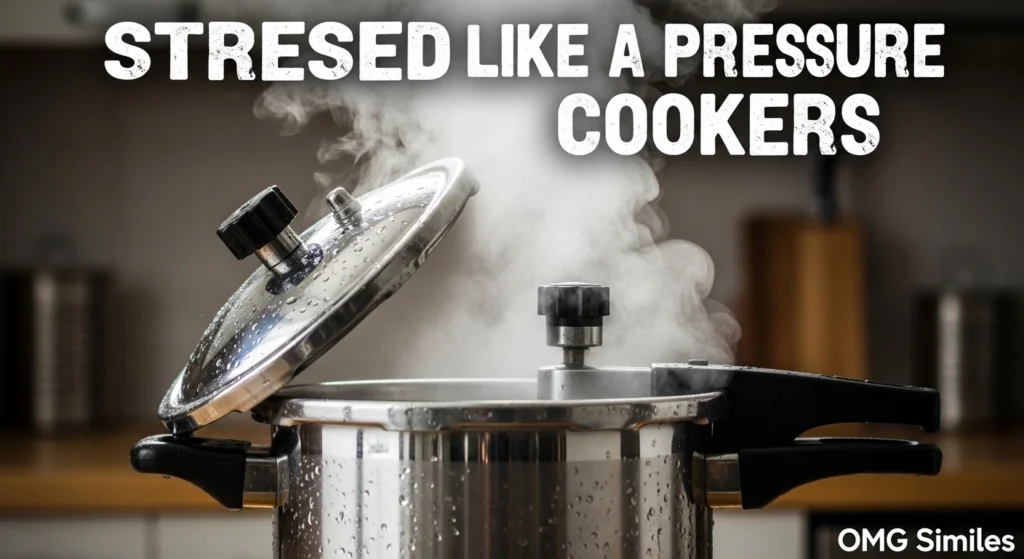
Meaning: High internal pressure
Tone: Strong, intense
Best usage: Anger, emotional buildup
Examples:
- I felt like a pressure cooker at work.
- She stayed quiet but felt pressure inside.
- Stress built like heat in a cooker.
Stressed like waves crashing nonstop
Meaning: Continuous stress
Tone: Poetic
Best usage: Ongoing anxiety
Examples:
- Stress hit me like nonstop waves.
- Problems kept crashing into me.
- Anxiety felt endless.
Stressed like carrying the world
Meaning: Heavy responsibility
Tone: Emotional
Best usage: Responsibility stress
Examples:
- I felt like carrying the world.
- He looked weighed down by responsibility.
- Stress felt heavy on my shoulders.
Stressed like a clock racing fast
Meaning: Time pressure
Tone: Urgent
Best usage: Deadlines
Examples:
- My mind raced like a fast clock.
- Deadlines made everything urgent.
- Stress sped up time.
Stressed like a spinning top
Meaning: Overwhelmed and dizzy
Tone: Visual
Best usage: Busy life
Examples:
- I felt like a spinning top today.
- Too many tasks made me dizzy.
- Stress kept me spinning.
Stressed like a knot tightening
Meaning: Anxiety increasing
Tone: Emotional
Best usage: Worry situations
Examples:
- My stomach felt like a tightening knot.
- Stress tightened throughout the day.
- I felt tension growing.
Stressed like a phone on 1% battery
Meaning: Exhaustion
Tone: Modern, relatable
Best usage: Burnout
Examples:
- I felt like a phone on 1%.
- My energy was almost gone.
- Stress drained me.
Stressed like a crowded highway
Meaning: Busy mind
Tone: Visual
Best usage: Overthinking
Examples:
- My thoughts were like traffic.
- Stress filled my mind.
- My brain felt crowded.
Stressed like a trapped bird
Meaning: Feeling stuck
Tone: Emotional
Best usage: Helplessness
Examples:
- I felt like a trapped bird.
- Stress made me feel stuck.
- She looked restless.
Stressed like thunder before rain
Meaning: Stress before an event
Tone: Poetic
Best usage: Anticipation anxiety
Examples:
- I felt like thunder before rain.
- Stress built before results.
- The tension was heavy.
Stressed like a heavy backpack
Meaning: Burden
Tone: Clear
Best usage: Responsibility
Examples:
- Stress felt like a heavy backpack.
- I carried worries all day.
- Responsibilities weighed me down.
Stressed like a cracked mirror
Meaning: Mental fragmentation
Tone: Deep
Best usage: Emotional stress
Examples:
- My thoughts felt broken.
- Stress cracked my focus.
- Everything felt scattered.
Stressed like drowning in noise
Meaning: Overstimulated
Tone: Modern
Best usage: Digital overwhelm
Examples:
- I felt drowned in noise.
- Notifications stressed me.
- My mind needed silence.
Stressed like a puzzle missing pieces
Meaning: Confusion
Tone: Soft
Best usage: Problem solving stress
Examples:
- Nothing made sense today.
- Stress felt incomplete.
- I searched for clarity.
Stressed like ice about to break
Meaning: Fragile tension
Tone: Dramatic
Best usage: Emotional pressure
Examples:
- I felt like thin ice.
- Stress made me fragile.
- One more problem felt too much.
Stressed like a crowded room
Meaning: Mental overload
Tone: Visual
Best usage: Overthinking
Examples:
- My mind felt crowded.
- Stress filled every thought.
- I needed space.
Stressed like fire spreading
Meaning: Stress increasing quickly
Tone: Strong
Best usage: Crisis
Examples:
- Stress spread fast.
- Problems multiplied.
- Anxiety escalated.
Stressed like a shaking bridge
Meaning: Instability
Tone: Dramatic
Best usage: Uncertainty
Examples:
- I felt unstable all day.
- Stress shook my confidence.
- Everything felt uncertain.
Stressed like rain that won’t stop
Meaning: Ongoing stress
Tone: Poetic
Best usage: Long-term anxiety
Examples:
- Stress felt endless like rain.
- Problems kept falling.
- I waited for calm.
Stressed like a trapped thought
Meaning: Overthinking
Tone: Psychological
Best usage: Mental stress
Examples:
- I couldn’t stop thinking.
- Stress repeated in my mind.
- Thoughts felt stuck.
Stressed like a stretched rubber band
Meaning: Near breaking point
Tone: Clear
Best usage: Burnout
Examples:
- I felt stretched thin.
- Stress pulled me tight.
- I needed rest.
Stressed like fog blocking vision
Meaning: Lack of clarity
Tone: Soft, descriptive
Best usage: Decision stress
Examples:
- My mind felt foggy.
- Stress blocked clarity.
- I couldn’t focus.
Stressed like a book full of bookmarks
Meaning: Too many unfinished tasks
Tone: Modern, relatable
Best usage: Productivity stress
Examples:
- I had too many tasks open.
- Stress came from unfinished work.
- My day felt scattered.
Daily-Use Sentences Using Similes for Stress
These are natural everyday examples:
- I feel like a pressure cooker today.
- My brain is like a crowded highway.
- I’m stressed like a phone on 1%.
- Work feels like nonstop waves.
- I’m stretched like a rubber band.
Texting Examples (Casual Use)
- “Bro I’m stressed like a balloon ready to burst 😭”
- “My brain = computer about to crash”
- “Deadlines got me like a ticking time bomb”
- “I feel like a hamster on a wheel today”
- “Life feels like nonstop rain lately”
Why Writers Use Similes for Stress
Benefits:
- Makes emotions visual
- Improves storytelling
- Helps readers connect
- Enhances SEO writing
- Adds originality
Semantic keywords used: anxiety metaphors, pressure descriptions, emotional writing, figurative language, expressive writing, stress imagery.
Tips to Create Your Own Stress Similes
- Compare stress with pressure objects (balloon, rope, cooker)
- Use nature (storms, waves, rain)
- Use modern life (battery, computer, traffic)
- Think about feelings (heavy, tight, fast)
Formula: 👉 Stress + like/as + vivid image
Example:
- Stress like static noise
- Stress like a crowded inbox
- Stress like a frozen screen
Conclusion
Stress is a universal experience, but describing it creatively makes writing more powerful. Similes for stress transform simple statements into vivid emotional images that readers instantly understand.
FAQs
What is a simile for stress?
A simile for stress compares stress to another object using “like” or “as,” such as “stressed like a balloon ready to burst.”
Why use similes for stress in writing?
They make emotions clearer, improve storytelling, and help readers visualize feelings.
Are similes good for academic writing?
Yes, when used carefully, they improve descriptive essays and creative assignments.
What is a simple simile for stress?
“Stressed like a tight rope” is simple and effective.
Can similes improve SEO content?
Yes. They increase engagement, readability, and dwell time.
What tone do stress similes create?
They can be emotional, dramatic, relatable, or poetic depending on the comparison.
How do I create my own stress simile?
Think about how stress feels (heavy, tight, fast) and compare it to something with the same quality.