
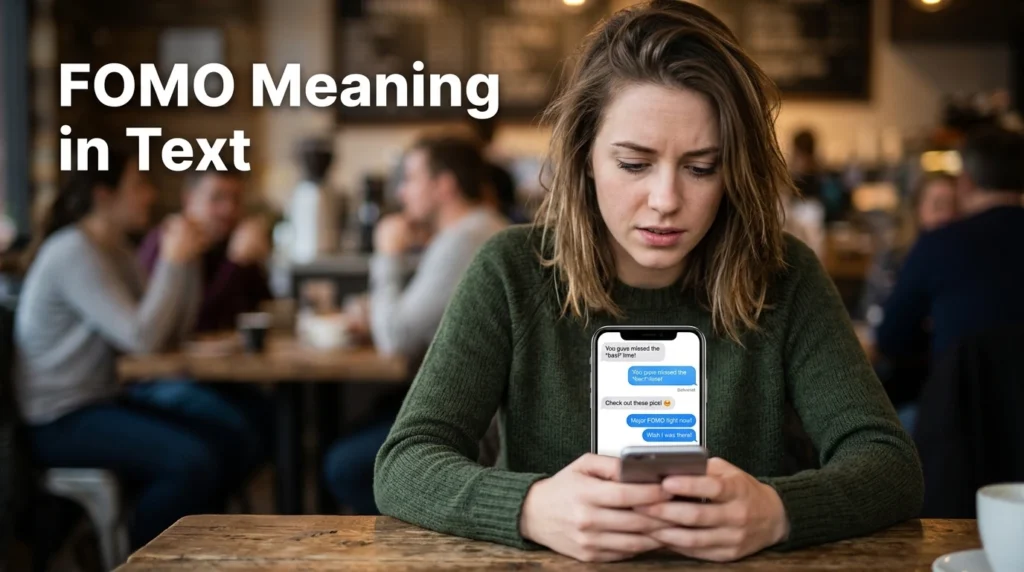
If you’ve ever received a message saying “I have major FOMO” or seen someone comment “This is giving me FOMO” on social media, you may have wondered what it actually means. Understanding FOMO meaning in text is useful because this popular internet slang appears everywhere—from personal chats and group messages to Instagram Stories, TikTok videos, and Snapchat posts.
Online conversations move quickly, and abbreviations help people express emotions in just a few letters. FOMO is one of the most common slang terms used to describe a feeling that many people experience in today’s digital world.
If you’re chatting with friends, scrolling through social media, or trying to understand Gen Z language, knowing this term makes online communication much easier.
In this guide, you’ll learn the full meaning of FOMO, where it came from, how people use it in texting, and the best ways to respond naturally.
What Does FOMO Mean in Text?
FOMO stands for Fear Of Missing Out.
In texting and online conversations, FOMO describes the feeling that other people are having fun, enjoying exciting experiences, or participating in something interesting without you.
Someone may use FOMO when they:
- Feel left out of an event.
- Wish they had joined friends.
- Regret skipping a party or trip.
- Want to be included in future plans.
- Feel jealous after seeing social media posts.
Short Meaning
FOMO = Fear Of Missing Out
It simply means:
“I don’t want to miss something exciting.”
Example
Alex: We’re all going to the beach tomorrow.
Sam: Don’t tell me that! Now I have serious FOMO.
Sam means they wish they could come too.
FOMO Full Form and Short Meaning
Full Form
FOMO = Fear Of Missing Out
This phrase became popular because people increasingly compared their lives with what they saw online.
Simple Definition
FOMO is:
- Anxiety about being left out.
- Worry that others are enjoying something better.
- Regret over missing experiences.
- A desire to join exciting activities.
It doesn’t always describe sadness. Sometimes people use it jokingly.
Example:
“I’ve got FOMO after seeing everyone’s vacation pictures.”
The Origin and Rise of FOMO
Although the feeling has existed for centuries, the word FOMO became popular during the early years of social media.
As platforms like Facebook, Instagram, Snapchat, and TikTok grew, people constantly saw updates about:
- Parties
- Concerts
- Vacations
- Food
- Shopping
- Relationships
- Celebrations
Seeing everyone else’s highlights made many people feel like they were missing exciting moments.
Eventually, Fear Of Missing Out became shortened to FOMO, making it easy to type during conversations.
Today, it’s one of the world’s most recognized internet slang expressions.
How Is FOMO Used in Text Messages?
People usually use FOMO to express emotions rather than give information.
Examples
Friend 1: We all watched the new movie.
Friend 2: Stop! You’re giving me FOMO.
Emma: Everyone’s at the concert.
Jake: My FOMO is getting worse.
Olivia: We went hiking today.
Liam: I should’ve come. Huge FOMO.
Noah: They’re having another game night.
Ava: Now I have FOMO.
The word naturally fits casual conversations.
Examples of FOMO in Everyday Chats
Here are realistic examples.
Example 1
Sarah: Everyone’s meeting tonight.
Emily: I wish I could come. FOMO is real.
Example 2
Ryan: We just ordered pizza.
Chris: Don’t send pictures! FOMO.
Example 3
Anna: Look at our vacation photos.
Mia: Those pictures are giving me FOMO.
Example 4
Jake: We stayed up playing games until 3 AM.
Ben: I missed everything. FOMO.
Example 5
Lucy: They’re announcing the winners today.
Ella: I have FOMO already.
FOMO Meaning on WhatsApp
On WhatsApp, FOMO usually appears in group chats.
Friends often use it when:
- Missing a meetup.
- Skipping dinner.
- Not joining a call.
- Missing family events.
- Missing school activities.
WhatsApp Example
Group Chat
“We all went bowling.”
“I’ve got serious FOMO now.”
The message shows playful disappointment.
FOMO Meaning on Instagram
Instagram is one of the biggest reasons people mention FOMO.
Users often experience FOMO after seeing:
- Vacation photos.
- Luxury lifestyles.
- Concerts.
- Parties.
- Food posts.
- Weddings.
- Festivals.
Example comments:
- This is giving me FOMO.
- My FOMO is so bad.
- Stop making me jealous.
Many influencers even joke about creating FOMO through their content.
FOMO Meaning on TikTok
TikTok users frequently mention FOMO when trends go viral.
Examples include:
- Missing challenges.
- Missing concerts.
- Missing trending products.
- Missing live events.
- Missing popular creators.
Example:
“I wasn’t online yesterday and now I have TikTok FOMO.”
It usually means they feel behind on trends.
FOMO Meaning on Snapchat
Snapchat Stories often create FOMO because users share moments instantly.
People may say:
“I saw your Story.”
“Now I’ve got FOMO.”
This usually means:
- They wish they were invited.
- They wish they had joined.
- They feel left out.
It’s generally lighthearted.
Other Meanings of FOMO
Although Fear Of Missing Out is by far the most common meaning, FOMO may occasionally appear in business discussions, marketing articles, or psychology research.
Examples include:
- Marketing strategies that create urgency.
- Consumer behavior studies.
- Investment discussions.
- Event promotions.
However, in texting and social media, Fear Of Missing Out is almost always the intended meaning.
Similar Slang Terms and Related Abbreviations
Several slang expressions have similar meanings.
| Slang | Meaning |
|---|---|
| YOLO | You Only Live Once |
| JOMO | Joy Of Missing Out |
| IMO | In My Opinion |
| TBH | To Be Honest |
| IDK | I Don’t Know |
| BRB | Be Right Back |
| SMH | Shaking My Head |
| ICYMI | In Case You Missed It |
| POV | Point Of View |
| FR | For Real |
Among these, JOMO is considered the opposite of FOMO.
What FOMO Does Not Mean
People sometimes misunderstand this slang.
FOMO does not mean:
- Being angry.
- Being lonely all the time.
- Hating your friends.
- Being depressed.
- Being invited already.
- Missing a text message.
- Being bored.
It specifically describes the feeling that you’re missing enjoyable experiences others are having.
Common Misunderstandings About FOMO
Many beginners confuse FOMO with other internet expressions.
Myth 1
FOMO means jealousy.
Reality: It may include jealousy, but it mainly describes feeling left out.
Myth 2
Only teenagers say FOMO.
Reality: Adults, brands, influencers, and businesses also use it.
Myth 3
FOMO is always serious.
Reality: Many people use it humorously.
Example:
“My friends ate cake without me. FOMO!”
FOMO vs JOMO: What’s the Difference?
These two terms are opposites.
FOMO
- Fear of missing fun.
- Wants to be included.
- Feels left out.
Example:
“I wish I had gone.”
JOMO
- Joy of Missing Out.
- Happy staying home.
- Enjoys relaxing.
Example:
“I’m skipping the party and loving it.”
Understanding both helps you recognize different online conversations.
How to Reply When Someone Says FOMO
There are many friendly ways to respond.
Polite Replies
- We’ll invite you next time.
- Hope you can join us soon.
- We missed you.
- Don’t worry, another event is coming.
- Next time won’t be the same without you.
Friendly Replies
- You definitely need to come next time.
- We saved pictures for you.
- You’ll love the next one.
- Come with us next weekend.
- We can’t wait to hang out again.
Flirty Replies
- It would’ve been better with you there.
- Next time you’re coming with me.
- I’ll save you a seat.
- We missed our favorite person.
- Don’t miss our next adventure.
Boundary-Respecting Replies
Sometimes people genuinely couldn’t attend.
Respectful responses include:
- No pressure.
- Hope everything’s okay.
- Join whenever you’re free.
- We’ll catch up later.
- Take care of yourself first.
These replies show kindness without making someone feel guilty.
Is FOMO Still Popular?
Yes.
FOMO remains one of the most popular internet slang words in 2026.
People still use it because social media constantly introduces:
- Viral trends.
- New movies.
- Concerts.
- Product launches.
- Travel videos.
- Gaming events.
- Online communities.
Although newer slang appears every year, FOMO continues to be widely understood across generations.
FOMO in Gen Z Slang Culture
Gen Z often uses FOMO casually rather than seriously.
Examples include:
- Food FOMO.
- Travel FOMO.
- Fashion FOMO.
- Gaming FOMO.
- Festival FOMO.
- Shopping FOMO.
- Streaming FOMO.
Sometimes the word is exaggerated for humor.
Example:
“My friend bought coffee without me. Instant FOMO.”
This playful use keeps the slang popular online.
Tips for Using FOMO Correctly
When using FOMO in text messages, remember these tips:
- Use it in casual conversations.
- Avoid using it in formal business emails.
- It usually describes missing enjoyable experiences.
- It can be serious or humorous depending on the situation.
- Pair it naturally with stories, photos, or event updates.
Good Examples
- I’m getting FOMO from your vacation posts.
- Seeing everyone together gives me FOMO.
- I skipped the concert and now I have FOMO.
- Your pictures are causing serious FOMO.
- I didn’t know everyone was meeting today!
How FOMO Affects Mental Health and Emotions
While FOMO meaning in text usually appears in casual conversations, the feeling behind it can sometimes affect a person’s emotional well-being. Constantly seeing friends traveling, attending parties, buying new things, or celebrating achievements on social media may make someone feel left out. Over time, this can lead to stress, anxiety, or low self-confidence.
It is important to remember that people usually share only their best moments online. Social media rarely shows everyday struggles, failures, or boring routines. Understanding this can help reduce feelings of FOMO.
Common emotional effects of FOMO include:
- Feeling left out of social events.
- Comparing yourself to others.
- Worrying about missing opportunities.
- Checking social media too often.
- Feeling pressure to always stay connected.
- Becoming distracted from real-life experiences.
- Feeling regret after saying no to plans.
- Wanting constant updates from friends.
Learning to balance online and offline life can help reduce the negative effects of FOMO.
Why People Say FOMO Instead of the Full Phrase
Most internet users prefer writing FOMO because it is short, easy to type, and instantly recognizable. Just like abbreviations such as LOL, OMG, and BRB, FOMO saves time while expressing a complete feeling.
Reasons people use FOMO include:
- Faster texting.
- Common internet slang.
- Easy to understand.
- Popular across social media.
- Fits naturally into conversations.
- Sounds casual and friendly.
- Widely recognized worldwide.
- Works well in comments and captions.
For example:
- That concert gave me FOMO.
- Your vacation photos are pure FOMO.
- I’m having FOMO after seeing everyone’s stories.
Using the abbreviation keeps conversations quick while still expressing emotion.
Signs Someone Is Experiencing FOMO
Sometimes people don’t directly say “I have FOMO,” but their messages clearly suggest they feel they are missing out. Recognizing these signs can help you better understand conversations.
Common signs include:
- Asking what happened after an event.
- Wanting to see lots of photos or videos.
- Saying they wish they had gone.
- Feeling disappointed about staying home.
- Frequently checking social media.
- Asking if another event is planned soon.
- Regretting not accepting an invitation.
- Hoping they can join next time.
Example conversation:
Emma: We all went to the new café today.
Lily: I should’ve come. I’m getting major FOMO!
This response clearly shows that Lily wishes she had been there.
When You Should Avoid Using FOMO
Although FOMO is a common slang term, it isn’t appropriate for every situation. Because it is informal, it works best in personal conversations rather than professional communication.
Avoid using FOMO in:
- Business emails.
- School assignments.
- Academic research.
- Formal presentations.
- Job applications.
- Official reports.
- Professional customer support.
- Legal documents.
Instead, use phrases like:
- I regret missing the event.
- I wish I could have attended.
- I missed an important opportunity.
- I hope to participate next time.
Choosing the right language helps match the tone of the conversation.
Examples of FOMO in Social Media Captions
Besides texting, people often use FOMO in captions to encourage engagement or describe exciting moments. Influencers, brands, and everyday users include the word to create excitement around their content.
Examples include:
- Weekend adventures causing serious FOMO.
- This sunset is worth the FOMO.
- Vacation mode activated.
- Concert nights you’ll never forget.
- Missing this festival? That’s FOMO.
- Best friends, great food, unforgettable memories.
- Wish you were here.
- Creating memories one trip at a time.
These captions invite followers to interact and often encourage them to join future events.
How Brands and Businesses Use FOMO in Marketing
FOMO isn’t just internet slang—it is also a powerful marketing strategy. Businesses create a sense of urgency so customers feel they might miss a great opportunity if they don’t act quickly.
Common examples include:
- Limited-time offers.
- Flash sales.
- Exclusive discounts.
- Early-access memberships.
- Limited-edition products.
- Countdown timers.
- Only a few items left.
- Sale ends tonight.
These messages encourage quicker decisions because customers don’t want to miss out on valuable deals.
Popular Phrases That Include FOMO
Over the years, internet users have created many expressions using the word FOMO. These phrases appear regularly in conversations, captions, and comments.
Popular examples include:
- FOMO is real.
- Major FOMO.
- Serious FOMO.
- Weekend FOMO.
- Travel FOMO.
- Food FOMO.
- Vacation FOMO.
- Event FOMO.
- Shopping FOMO.
- Festival FOMO.
These variations help describe exactly what someone feels they are missing.
Will FOMO Continue to Be Popular in the Future?
Internet slang changes quickly, but FOMO meaning in text has remained popular for many years because the feeling it describes is universal. As long as people continue sharing their lives online, the term is likely to stay relevant.
Reasons FOMO is expected to remain popular include:
- Social media continues to grow.
- New platforms appear regularly.
- Online communities connect millions of people.
- Viral trends spread faster than ever.
- People enjoy sharing life updates.
- Brands continue using FOMO in marketing.
- Gen Z and Gen Alpha recognize the term.
- The abbreviation is simple and memorable.
FAQs :
What does FOMO mean in text?
FOMO means Fear Of Missing Out. It describes the feeling of missing enjoyable experiences that others are having.
Is FOMO a positive or negative slang term?
It is usually neutral. It can express disappointment, excitement, or playful humor depending on the conversation.
What is the full form of FOMO?
The full form of FOMO is Fear Of Missing Out.
What does FOMO mean on TikTok?
On TikTok, FOMO refers to feeling left out after seeing viral videos, trends, challenges, or exciting events that others are enjoying.
What is the opposite of FOMO?
The opposite is JOMO, which stands for Joy Of Missing Out. It means feeling happy about staying home or choosing not to participate.
Is FOMO only used by Gen Z?
No. While Gen Z uses it often, millennials, businesses, marketers, and many social media users of all ages understand and use the term.
Can FOMO be used in a funny way?
Yes. Many people jokingly say they have FOMO after seeing friends eat delicious food, attend a party, or post vacation photos.
Conclusion :
Understanding FOMO meaning in text makes it much easier to follow today’s online conversations. The abbreviation stands for Fear Of Missing Out and describes the feeling of wishing you were part of an enjoyable experience that others are having.
If you see it in WhatsApp chats, Instagram comments, TikTok videos, or Snapchat Stories, FOMO is usually used in a friendly, humorous, or relatable way.
By learning its full form, origin, common uses, and the best ways to reply, you can confidently understand and use this popular slang in everyday digital communication. As internet language continues to evolve, FOMO remains one of the most recognizable and widely used expressions across social media and texting.