

Similes are tiny mirrors that let readers see one thing through another. They compare two things using like or as, turning plain descriptions into vivid images. Writers, poets, and everyday speakers use similes to make emotion, beauty, and truth easier to feel.
The phrase like a rose is a classic starting point — it carries ideas of beauty, fragility, scent, love, and even danger. Below you’ll find 15 fresh similes built around like a rose, each explained simply, with tone notes, best-use tips, and multiple natural example sentences you can borrow or adapt.
Like a rose in full bloom
- Meaning: Bright, confident, and at the peak of beauty or power.
- Tone: Joyful, celebratory, admiring.
- Best usage context: Celebrating success, describing someone at their best, or painting a scene of vibrant life.
Examples:
- Her smile opened like a rose in full bloom, impossible to ignore.
- On the stage she stood like a rose in full bloom—centered, radiant, unforgettable.
- After months of practice, his performance felt like a rose in full bloom.
Like a rose with hidden thorns
- Meaning: Beautiful but with an unexpected edge or danger.
- Tone: Cautionary, complex, slightly ironic.
- Best usage context: Describing people or situations that mix charm with risk; layered characters.
Examples:
- She welcomed him warmly, but there was a way she watched that was like a rose with hidden thorns.
- The town’s façade was like a rose with hidden thorns—pretty at first glance, dangerous if you dug deeper.
- His kindness was genuine but sharp in places, like a rose with hidden thorns.
Like a rose at dawn (dewy)
- Meaning: Fresh, innocent, and tender—new beginnings.
- Tone: Gentle, hopeful, tender.
- Best usage context: New relationships, morning scenes, rebirth, or gentle beauty.
Examples:
- Her optimism was like a rose at dawn, delicate and full of promise.
- The garden smelled like a rose at dawn after the rain—pure and clean.
- He watched the baby sleep, feeling as protective as a gardener watching a rose at dawn.
As delicate as a rose petal
- Meaning: Extremely fragile or sensitive.
- Tone: Soft, careful, reverent.
- Best usage context: Emphasizing vulnerability—of people, feelings, or objects.
Examples:
- Handle her heart as you would something as delicate as a rose petal.
- The old letter was as delicate as a rose petal; I read it with gloved fingers in my mind.
- After the storm, the sapling’s leaves were as delicate as rose petals.
Like a rose fading

- Meaning: Beauty or strength that is diminishing over time.
- Tone: Melancholic, nostalgic, reflective.
- Best usage context: Aging, endings, loss, or bittersweet transitions.
Examples:
- The paint on the shutters reddened and cracked like a rose fading.
- Their love, once fiery, now wilted slowly like a rose fading.
- She kept the photograph, watching the edges go soft like a rose fading in sunlight.
Like a rose wrapped in velvet
- Meaning: Luxurious, gentle, rich in texture or feeling.
- Tone: Opulent, sensual, warm.
- Best usage context: Describing sensory luxury—fabric, voice, atmosphere, or romance.
Examples:
- His voice fell over her like a rose wrapped in velvet—smooth, warm, and persuasive.
- The room was decorated like a rose wrapped in velvet: plush, deep, and comforting.
- The dessert tasted like a rose wrapped in velvet—sweet, soft, and indulgent.
Like a rose in the rain
- Meaning: Tested by hardship but still beautiful; resilience with softness.
- Tone: Resilient, tender, poetic.
- Best usage context: Scenes of struggle where beauty remains, surviving difficulties.
Examples:
- She walked through criticism like a rose in the rain—battered but blooming.
- His determination was like a rose in the rain: tested, shimmering, stubbornly alive.
- After the argument, their quiet was like a rose in the rain—wet, honest, recovering.
Like a rose among thorns
- Meaning: Standing out as beautiful or kind in a harsh environment.
- Tone: Admirational, protective.
- Best usage context: Praising someone remarkable within a difficult group or place.
Examples:
- In that office of cynics she was like a rose among thorns—gentle, surprising, rare.
- His kindness felt like a rose among thorns in a city that had forgotten manners.
- The small cafe was like a rose among thorns on a busy downtown street—calm and welcome.
Like a rose’s scent in the air
- Meaning: Subtle, lingering, hard to hold but unforgettable.
- Tone: Dreamy, evocative, wistful.
- Best usage context: Memories, atmosphere, a feeling that lingers just out of reach.
Examples:
- Her laughter hung in the room like a rose’s scent in the air—soft and impossible to capture.
- The memory of summer was like a rose’s scent in the air: it floated back when least expected.
- The idea of home arrived like a rose’s scent in the air—faint, reassuring, familiar.
Like a rose kissed by sunlight
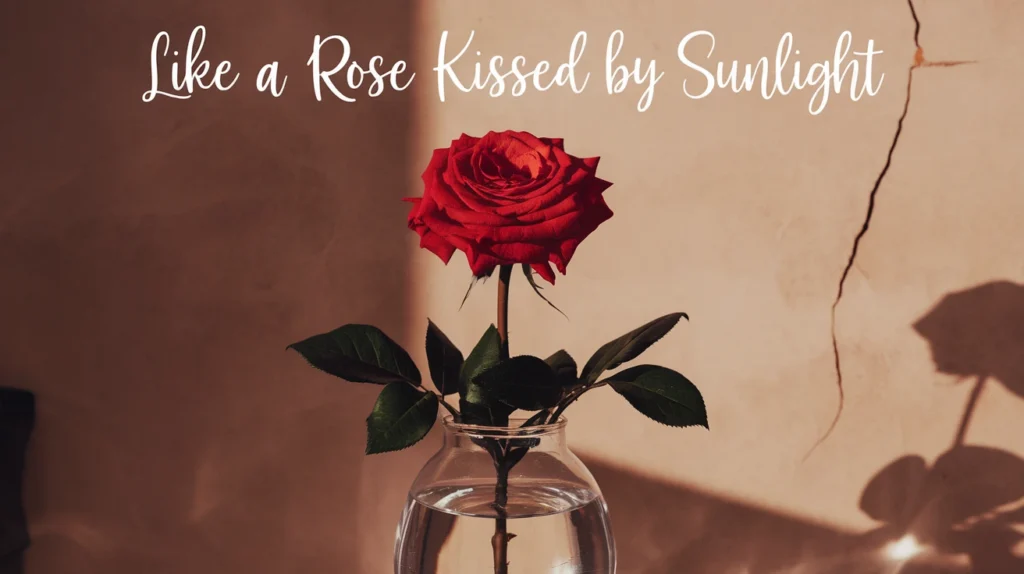
- Meaning: Warm, glowing, touched by good fortune.
- Tone: Bright, optimistic, tender.
- Best usage context: Moments of happiness, flattering descriptions, small triumphs.
Examples:
- Her cheeks turned like a rose kissed by sunlight when he complimented her.
- The field was like a rose kissed by sunlight—alive with color and warmth.
- After the good news, his step was like a rose kissed by sunlight—lighter and certain.
Like a rose pressed in a book
- Meaning: Preserved, cherished, a memory kept safe.
- Tone: Nostalgic, intimate, sentimental.
- Best usage context: Keepsakes, memories, promises, or anything treasured for later.
Examples:
- The story of their first year stayed with him like a rose pressed in a book.
- She kept the ticket stub like a rose pressed in a book—small proof of something beautiful.
- Their promise remained like a rose pressed in a book, fragile but preserved.
Like a rose reborn each spring
- Meaning: Renewal, hope, the cycle of recovery or improvement.
- Tone: Hopeful, uplifting, reassuring.
- Best usage context: Recovery stories, second chances, seasonal metaphors.
Examples:
- After months of doubt he began again, like a rose reborn each spring.
- Their friendship, strained for a time, returned like a rose reborn each spring—slow and real.
- The project failed once but came back better, like a rose reborn each spring.
Like a rose blushing
- Meaning: Flushed with color, modestly beautiful, shy or bashful.
- Tone: Sweet, delicate, playful.
- Best usage context: Romantic moments, shy reactions, subtle beauty.
Examples:
- She looked at him and went as soft as a rose blushing.
- The sky went like a rose blushing at sunset—pink and tender.
- When praised, his face warmed like a rose blushing—awkward and sweet.
Like a rose guarding secrets

- Meaning: Mysterious beauty that hints at hidden stories.
- Tone: Intriguing, secretive, poetic.
- Best usage context: Characters or places with depth and mystery, storytelling hooks.
Examples:
- Her smile was like a rose guarding secrets—open, but keeping something back.
- The old house sat like a rose guarding secrets, windows dark and full of whispers.
- His diary read like a rose guarding secrets: lovely but not for everyone’s eyes.
Like a rose handpicked for you
- Meaning: Personal, chosen, an intimate or deliberate gesture.
- Tone: Warm, affectionate, sincere.
- Best usage context: Gifts, personal compliments, expressions of affection.
Examples:
- That compliment felt like a rose handpicked for you—meant and specific.
- The song he sang was like a rose handpicked for her, tender and thoughtful.
- Her advice arrived like a rose handpicked for you—careful, personal, perfect.
Quick Texting Examples
- “You looked like a rose in full bloom at the party tonight 🌹”
- “That apology felt like a rose pressed in a book — sincere and kept.”
- “I’ll be there soon, like a rose kissed by sunlight—smiling already.”
- “Her reply was like a rose with hidden thorns; sweet but guarded.”
- “Missing you—your laugh is like a rose’s scent in the air.”
Daily-Use Sentences to Keep Handy
- Compliment: “You’re like a rose among thorns in this tough world.”
- Memory: “That afternoon is a rose pressed in a book for me.”
- Encouragement: “Keep trying; you’ll come back like a rose reborn each spring.”
- Caution: “Remember, beautiful things can be like a rose with hidden thorns.”
- Romantic: “You blush like a rose blushing—and it’s my favorite color.”
Writing Tips for Using “Like a Rose” Similes
- Match tone to context: Use soft similes for tenderness and sharper ones when you want complexity.
- Avoid clichés by adding a twist: Pair the simile with an unexpected verb or setting (e.g., like a rose in a subway).
- Use sensory detail: Mention scent, touch, or light to make the simile feel real.
- Keep it concise: A short simile often lands harder than a long one.
- Vary placement: Let the simile open a sentence, appear midline, or close a paragraph for rhythm.
Conclusion
Similes built around like a rose are powerful because roses carry many meanings—beauty, fragility, scent, protection, memory, and renewal. Using these comparisons gives your writing emotional depth and sensory life. Try them in dialogue, descriptions, or quick texts to boost mood and clarity. Whether you want to praise, warn, comfort, or evoke longing, a well-chosen rose simile can bloom on the page and stay with the reader long after they finish reading. Keep experimenting—let your writing smell like a rose.