
Similes are powerful tools in language that help us describe one thing by comparing it to something else, making ideas more vivid and relatable. They’re especially useful when you want to explain an emotion, quality, or experience in a way readers instantly understand. In this article, we’ll explore similes for “bad” — creative, expressive comparisons that can refresh your writing and make descriptions more engaging.
Whether you’re writing a story, enhancing your essays, or just trying to communicate more clearly in everyday conversations, these similes will help you say “bad” with flair.
Rotten as a decayed apple
Meaning: Extremely bad or spoiled.
Tone: Harsh, clear.
Best used when: Describing something truly ruined — physically or morally.
Examples:
- The apples were as rotten as a decayed apple — black inside and smelling awful.
- His attitude was as rotten as a decayed apple, pushing everyone away.
- That performance was as rotten as a decayed apple — it needed more practice.
Daily sentences:
- Text to friend: That movie was as rotten as a decayed apple — total waste of time.
- In class: Her project was as rotten as a decayed apple because she didn’t research.
Awful like a stormy night
Meaning: Terribly unpleasant or frustrating.
Tone: Dramatic and descriptive.
Best used when: Emphasizing strong dislike or discomfort.
Examples:
- The food tasted like an awful stormy night — chaotic and disappointing.
- His voice was like an awful stormy night during the argument.
- That review read like an awful stormy night, full of complaints.
Texting examples:
- My test was like an awful stormy night — pure chaos.
- Dinner was like an awful stormy night.
Terrible as burned toast
Meaning: Very unpleasant or disappointing.
Tone: Relatable, everyday.
Best used when: Comparing quality levels with something people have seen or smelled.
Examples:
- Her joke landed as terrible as burned toast — no one laughed.
- That decision tasted as terrible as burned toast to the whole team.
- His cooking was as terrible as burned toast.
Daily-use:
- The game was as terrible as burned toast.
- Weather today = as terrible as burned toast.
Horrible like a nightmare
Meaning: Extremely distressing or frightening.
Tone: Intense and emotional.
Best used when: Describing emotional experiences or scary situations.
Examples:
- The movie was horrible like a nightmare I couldn’t wake up from.
- That test felt horrible like a nightmare I wasn’t ready for.
- Traffic was horrible like a nightmare this morning.
Ugly as a mud puddle
Meaning: Very unattractive or unpleasant to look at.
Tone: Visual and concrete.
Best used when: Describing appearances — objects or scenes.
Examples:
- The design was as ugly as a mud puddle.
- Her drawing looked as ugly as a mud puddle.
- That graffiti was as ugly as a mud puddle.
Bad like expired milk
Meaning: Spoiled, damaging.
Tone: Everyday and sensory.
Best used when: Describing things that unexpectedly go wrong.
Examples:
- His mood was like expired milk — sour quickly.
- That idea was like expired milk — no one wanted it.
- The plan turned out like expired milk.
Lousy as old shoes
Meaning: Uncomfortable or not good.
Tone: Casual and informal.
Best used when: Talking about experiences or items that fall short.
Examples:
- The concert was as lousy as old shoes.
- Homework felt as lousy as old shoes.
- That game was as lousy as old shoes.
Dreadful like cold soup
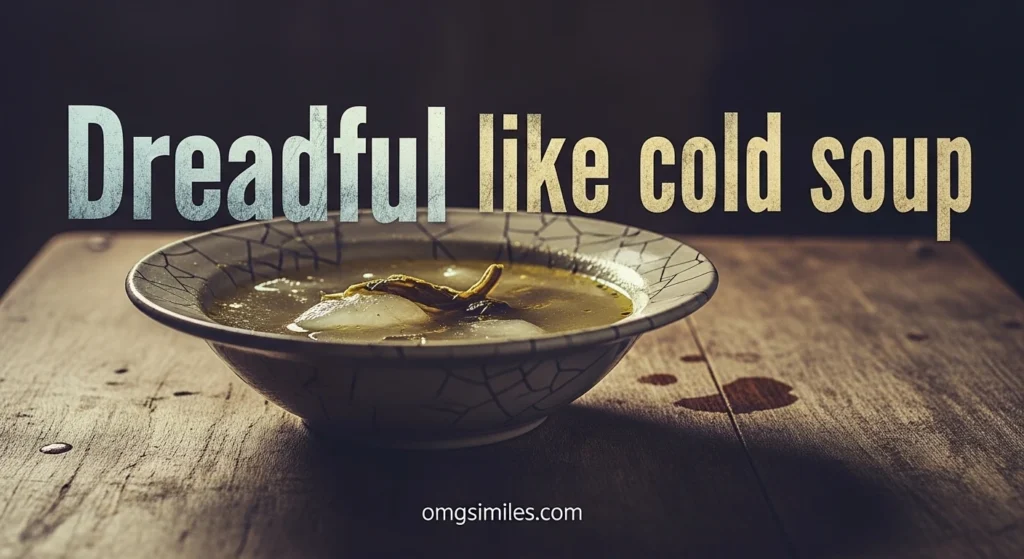
Meaning: Totally unenjoyable.
Tone: Strong and food-related.
Best used when: Comparing things that are unexpectedly unpleasant.
Examples:
- The lecture was like cold soup — dull.
- Her performance was like cold soup.
- That book was like cold soup, not worth finishing.
Rotten as spoiled fruit
Meaning: Bad in quality or moral judgement.
Tone: Sharp, vivid.
Best used when: Strong negative descriptions.
Examples:
- Their behavior was as rotten as spoiled fruit.
- That critique was as rotten as spoiled fruit.
- The deal felt as rotten as spoiled fruit.
Pathetic like thin ice
Meaning: Weak, unstable or likely to fail.
Tone: Metaphorical and sharp.
Best used when: Showing fragility or weakness.
Examples:
- His excuse was like thin ice — cracking soon.
- That plan was like thin ice.
- Her argument felt like thin ice — not solid.
Awful as burnt popcorn
Meaning: Very unpleasant.
Tone: Sensory, clear.
Best used when: Talking about smells, situations gone wrong.
Examples:
- The cafeteria smelled as awful as burnt popcorn.
- That movie was as awful as burnt popcorn.
- The party felt as awful as burnt popcorn.
Pathetic like wilted flowers
Meaning: Lifeless, weak.
Tone: Poetic and soft.
Best used when: Emotional descriptions.
Examples:
- His confidence looked like wilted flowers.
- That speech felt like wilted flowers.
- Her energy was like wilted flowers.
Terrible as a flat tire
Meaning: Unpleasant and frustrating.
Tone: Everyday inconvenience.
Best used when: Talking about disruptions.
Examples:
- His mood was as terrible as a flat tire.
- That outcome was as terrible as a flat tire.
- The test felt as terrible as a flat tire.
Nasty like bitter coffee
Meaning: Unpleasant, sharp.
Tone: Sensory, relatable.
Best used when: Describing taste or tone.
Examples:
- That comment was like bitter coffee.
- Her attitude was like bitter coffee.
- The vibe in the room was like bitter coffee.
Rotten as spoiled meat
Meaning: Absolutely bad or corrupted.
Tone: Strong, intense.
Best used when: Strong negative feelings.
Examples:
- The smell was as rotten as spoiled meat.
- That rumor was as rotten as spoiled meat.
- The experience was as rotten as spoiled meat.
Terrible like a thunderstorm
Meaning: Harsh and disruptive.
Tone: Dramatic.
Best used when: Emotional turmoil or chaotic events.
Examples:
- The argument was like a thunderstorm.
- That exam period was like a thunderstorm.
- Monday felt like a thunderstorm.
Lousy as stale bread
Meaning: Disliked and bland.
Tone: Mundane and clear.
Best used when: Everyday disappointments.
Examples:
- His joke was as lousy as stale bread.
- That snack was as lousy as stale bread.
- The sequel felt as lousy as stale bread.
Horrible like rotten eggs
Meaning: Foul and unwanted.
Tone: Sensory and direct.
Best used when: Describing smell or quality.
Examples:
- The gym smelled like rotten eggs.
- That idea was like rotten eggs.
- Her attitude felt like rotten eggs.
Pathetic as deflated balloon
Meaning: Empty, disappointing.
Tone: Playful yet clear.
Best used when: Missed expectations.
Examples:
- His performance was as pathetic as a deflated balloon.
- That punchline was as pathetic as a deflated balloon.
- The event felt as pathetic as a deflated balloon.
Awful like cold leftovers
Meaning: Not enjoyable, disappointing.
Tone: Everyday comparison.
Best used when: Talking about things you expected to enjoy.
Examples:
- The weekend was like cold leftovers.
- Her review like cold leftovers.
- The lunch tasted like cold leftovers.
Rotten as moldy bread
Meaning: Bad, unwanted.
Tone: Sensory and concrete.
Best used when: Strong negative descriptions.
Examples:
- The room smelled as rotten as moldy bread.
- Their teamwork was as rotten as moldy bread.
- The movie was as rotten as moldy bread.
Dreadful like an empty gas tank
Meaning: Frustrating and limiting.
Tone: Relatable.
Best used when: Talking about being stuck or stopped.
Examples:
- The day felt like an empty gas tank.
- His energy was like an empty gas tank.
- That moment was like an empty gas tank.
Nasty as spilled milk
Meaning: Irritating, unpleasant.
Tone: Common expression.
Best used when: Everyday annoyance.
Examples:
- Monday morning was as nasty as spilled milk.
- Her comment felt as nasty as spilled milk.
- The traffic was as nasty as spilled milk.
Terrible like burnt toast
Meaning: Plain disappointing.
Tone: Simple.
Best used when: Mildly bad experiences.
Examples:
- His mood was like burnt toast.
- That assignment felt like burnt toast.
- The concert was like burnt toast.
Horrible as a dull knife
Meaning: Ineffective and disappointing.
Tone: Visual.
Best used when: Describing tools, skills, or experiences that fail.
Examples:
- Her performance was as horrible as a dull knife.
- That movie cut expectations like a dull knife — badly.
- The talk was as horrible as a dull knife.
Pathetic like wilted lettuce
Meaning: Weak and droopy.
Tone: Sensory and visual.
Best used when: Emotional or descriptive comparisons.
Examples:
- His motivation was like wilted lettuce.
- That speech was like wilted lettuce.
- Her strength felt like wilted lettuce.
Awful as burnt dinner
Meaning: Negatively memorable.
Tone: Clear and everyday.
Best used when: Everyday failures.
Examples:
- The party was as awful as burnt dinner.
- The movie night was as awful as burnt dinner.
- That assignment felt as awful as burnt dinner.
Bad like a cold shower
Meaning: Unpleasant and shocking.
Tone: Sensory.
Best used when: Describing quick unpleasant experiences.
Examples:
- Waking up felt like a cold shower.
- That review hit me like a cold shower.
- The result felt like a cold shower.
Easy Texting Examples to Use
- That quiz was as bad as stale chips.
- Her mood today is like a thunderstorm.
- This game is like cold leftovers — not fun at all.
- That idea? As pathetic as wilted lettuce.
- His excuse was like thin ice — weak.
How to Choose the Right Simile
When picking a simile:
- Match the strength of “bad” you want to express.
- Think about senses — smells, looks, feelings help make comparisons clearer.
- Use relatable experiences so readers instantly get it.
Why Similes Improve Your Writing
Similes:
- Make descriptions more vivid and memorable.
- Help readers visualize and feel what you mean.
- Add tone and emotion to simple words like “bad”.
- Increase reader engagement in stories and essays.
Using creative similes can turn dull descriptions into dynamic writing.
FAQs
1. What is a simile?
A simile compares two things using words like “as” or “like” to highlight a specific quality — for example, “as bad as rotten fruit.”
2. Why use similes instead of just saying “bad”?
Similes help readers visualize the idea, making writing more expressive and engaging.
3. Are some similes stronger than others?
Yes — “like a nightmare” feels stronger than “like cold leftovers”. Choose based on how intense you want the meaning to be.
4. Can similes be informal?
Absolutely! Many similes are casual and work well in everyday conversation.
5. Should similes match tone?
Yes — match your simile to the tone (funny, serious, dramatic) you want to express.
6. Are similes the same as metaphors?
No — both compare things, but similes use like or as, while metaphors don’t.
7. Can I make my own similes?
Of course! Just think of something most people know and link it clearly to the quality you want to describe.
Conclusion
Using similes for “bad” enriches your writing, helps readers visualize your point, and adds personality to simple descriptions. From “like a stormy night” to “as rotten as spoiled meat,” you now have 30 vivid comparisons to express different levels of negativity. Practice them in your essays, stories, and messages to make your language more expressive, engaging, and memorable.