
Happiness is one of the most powerful emotions we experience, and writers often want to describe it in ways that feel alive and relatable. This is where similes shine. A simile is a figure of speech that compares one thing to another using words like “as” or “like.” It helps readers see, feel, and imagine emotions instead of just being told about them.
In everyday language, poetry, stories, social media captions, and even text messages, similes make emotions more vivid. Below, you’ll find a carefully crafted list of similes for feeling happy, each explained clearly with tone, best usage, and natural examples. These comparisons will help you express joy in a more colorful, human, and memorable way.
Happy like a child on their birthday
Meaning: This simile compares happiness to the pure, uncontrollable joy a child feels on their birthday.
Tone: Innocent, warm, joyful
Best used when: Describing excitement, surprise, or heartfelt happiness
Examples:
- She was happy like a child on their birthday when she saw the results.
- He smiled, happy like a child on their birthday, holding the gift.
- I felt happy like a child on their birthday after hearing the good news.
Daily-use idea: Perfect for texts or casual writing when someone is genuinely thrilled.
Happy as sunshine after rain
Meaning: This simile reflects happiness that follows hard times, just like sunshine after a storm.
Tone: Hopeful, uplifting
Best used when: Expressing relief or renewed joy
Examples:
- She felt happy as sunshine after rain once the problem was solved.
- His laugh was happy as sunshine after rain.
- Life felt happy as sunshine after rain after those difficult weeks.
Happy like birds singing at dawn
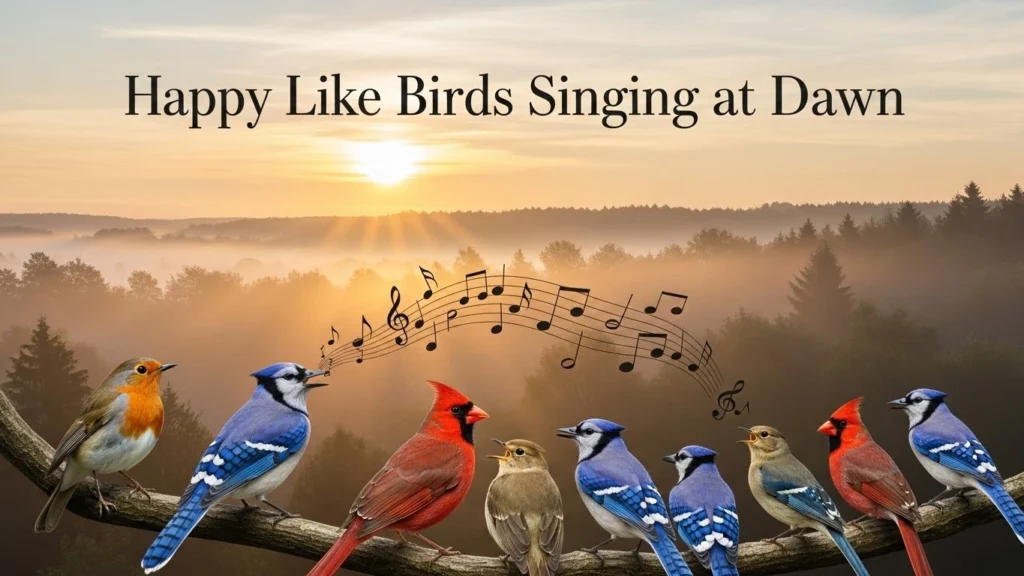
Meaning: Suggests gentle, peaceful happiness that feels natural and calm.
Tone: Soft, serene
Best used when: Writing about quiet joy or contentment
Examples:
- She woke up happy like birds singing at dawn.
- His heart felt happy like birds singing at dawn.
- The moment was happy like birds singing at dawn.
Happy as a blooming flower
Meaning: Represents happiness that grows naturally and beautifully.
Tone: Positive, fresh
Best used when: Describing personal growth or emotional healing
Examples:
- She looked happy as a blooming flower in spring.
- His confidence made him happy as a blooming flower.
- I felt happy as a blooming flower after achieving my goal.
Happy like laughter in a quiet room
Meaning: Highlights happiness that stands out and fills the space.
Tone: Emotional, expressive
Best used when: Writing about contagious joy
Examples:
- Her voice sounded happy like laughter in a quiet room.
- The news spread happy like laughter in a quiet room.
- He felt happy like laughter in a quiet room.
Happy as a warm hug

Meaning: Compares happiness to emotional comfort and closeness.
Tone: Loving, comforting
Best used when: Describing emotional safety or affection
Examples:
- Her words made me happy as a warm hug.
- He felt happy as a warm hug after meeting his family.
- The memory stayed happy as a warm hug.
Texting tip: Great for messages to loved ones or emotional conversations.
Happy like a dog seeing its owner
Meaning: Expresses enthusiastic, unfiltered joy.
Tone: Playful, energetic
Best used when: Showing excitement or reunion
Examples:
- She was happy like a dog seeing its owner.
- He ran toward her, happy like a dog seeing its owner.
- I felt happy like a dog seeing its owner after a long day.
Happy as music on a long drive
Meaning: Suggests relaxed, flowing happiness.
Tone: Calm, reflective
Best used when: Writing about peaceful enjoyment
Examples:
- The moment felt happy as music on a long drive.
- He smiled, happy as music on a long drive.
- Life felt happy as music on a long drive that evening.
Happy like stars lighting up the sky
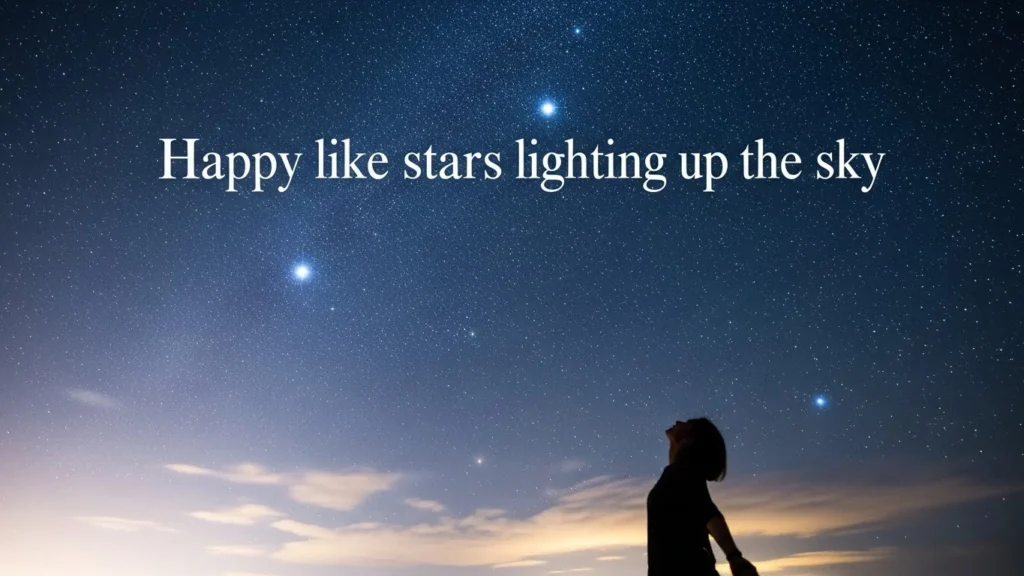
Meaning: Represents happiness that shines and inspires.
Tone: Dreamy, poetic
Best used when: Describing emotional highs or special moments
Examples:
- Her eyes looked happy like stars lighting up the sky.
- The success made him happy like stars lighting up the sky.
- The night felt happy like stars lighting up the sky.
Happy as fresh air in the morning
Meaning: Shows clean, refreshing happiness.
Tone: Light, optimistic
Best used when: Writing about new beginnings
Examples:
- She felt happy as fresh air in the morning.
- His freedom made him happy as fresh air in the morning.
- I woke up happy as fresh air in the morning.
Happy like ice cream on a hot day
Meaning: Describes simple, satisfying happiness.
Tone: Fun, relatable
Best used when: Casual writing or everyday joy
Examples:
- The surprise made her happy like ice cream on a hot day.
- He laughed, happy like ice cream on a hot day.
- That moment felt happy like ice cream on a hot day.
Happy as winning without expecting it

Meaning: Reflects unexpected happiness and delight.
Tone: Surprised, joyful
Best used when: Describing sudden good news
Examples:
- She was happy as winning without expecting it.
- He smiled, happy as winning without expecting it.
- I felt happy as winning without expecting it today.
Happy like a song you love
Meaning: Suggests familiar, comforting joy.
Tone: Emotional, personal
Best used when: Writing about nostalgia or emotional connection
Examples:
- He felt happy like a song you love.
- Her presence was happy like a song you love.
- The memory stayed happy like a song you love.
Happy as light through a window
Meaning: Represents gentle happiness entering one’s life.
Tone: Soft, hopeful
Best used when: Describing emotional relief
Examples:
- The news felt happy as light through a window.
- She smiled, happy as light through a window.
- His kindness felt happy as light through a window.
Happy like finally being understood

Meaning: Compares happiness to emotional validation and relief.
Tone: Deep, meaningful
Best used when: Emotional writing or personal stories
Examples:
- She felt happy like finally being understood.
- He smiled, happy like finally being understood.
- I felt happy like finally being understood by someone.