
Spring is the season of renewal, color, freshness, and hope. Writers, students, poets, and storytellers often use similes for spring to describe this lively season in a more vivid and creative way.
A simile is a figure of speech that compares two different things using the words “like” or “as.” It helps readers imagine, feel, and visualize what the writer is describing. Instead of saying “spring is beautiful,” you can say “spring is like a freshly painted canvas,” which creates a stronger mental image.
In this guide, you’ll discover 30 powerful similes for spring, each explained with meaning, tone, usage tips, and natural example sentences. You’ll also find practical daily-use examples to make these similes easy to use in writing, texting, and conversations.
Spring is like a freshly painted canvas
Meaning: Spring brings new colors, life, and beauty, just like a blank canvas filled with fresh paint.
Tone: Artistic, hopeful, vivid
Best usage: Describing scenery, nature writing, poetry
Examples:
- The garden looked like a freshly painted canvas after the spring rain.
- Trees stood proudly like strokes of green paint on nature’s canvas.
- Spring spread colors across the fields like an artist at work.
Spring is like a gentle alarm clock
Meaning: Spring wakes the world softly from winter sleep.
Tone: Calm, peaceful, refreshing
Best usage: Morning scenes, seasonal transitions
Examples:
- Birds chirping in spring felt like a gentle alarm clock for the earth.
- The sunlight in spring woke the town like a soft morning bell.
- Spring arrives like a gentle alarm clock after winter’s long nap.
Spring is like a newborn baby
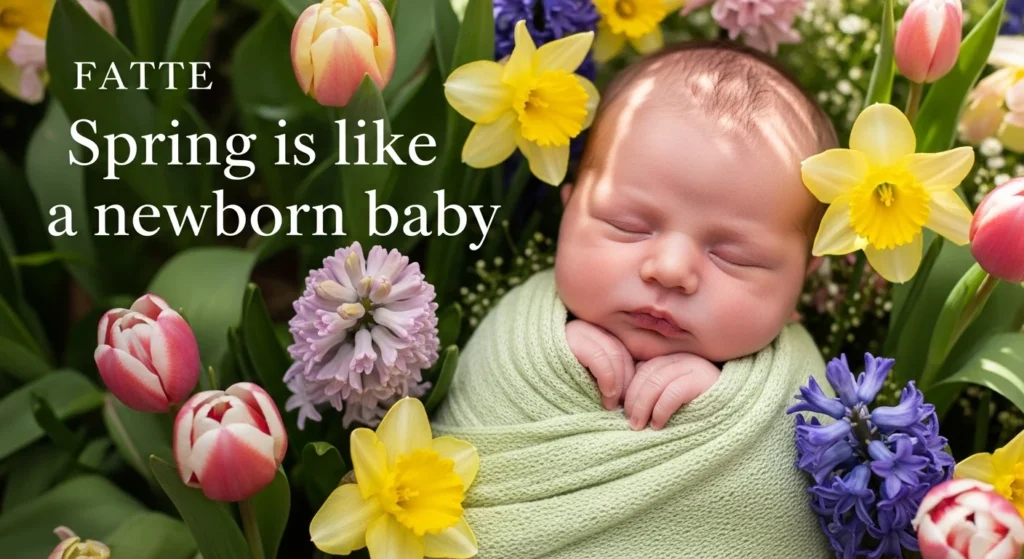
Meaning: It represents new beginnings, innocence, and fresh life.
Tone: Warm, emotional, hopeful
Best usage: Creative writing, reflective passages
Examples:
- The first flowers of spring appeared like a newborn baby opening its eyes.
- Spring felt delicate and pure like a newborn child.
- Each bud looked like a tiny newborn greeting the world.
Spring is like a cheerful song
Meaning: Full of joy, energy, and positivity.
Tone: Happy, musical, lively
Best usage: Describing mood and atmosphere
Examples:
- The breeze in spring hummed like a cheerful song.
- Children playing outside made spring sound like music.
- The world in spring feels like a song you can’t stop humming.
Spring is like a warm smile
Meaning: Comforting, welcoming, and kind.
Tone: Friendly, light, pleasant
Best usage: Emotional descriptions
Examples:
- Sunshine in spring spread across the land like a warm smile.
- The weather felt kind like a smiling friend.
- Spring greeted us like a warm smile after a cold winter.
Spring is like a colorful festival
Meaning: Full of colors, excitement, and celebration.
Tone: Festive, vibrant
Best usage: Describing flowers and landscapes
Examples:
- The valley looked like a colorful festival in spring.
- Blossoms decorated trees like festival lights.
- Spring turned the fields into a celebration of colors.
Spring is like a fresh start
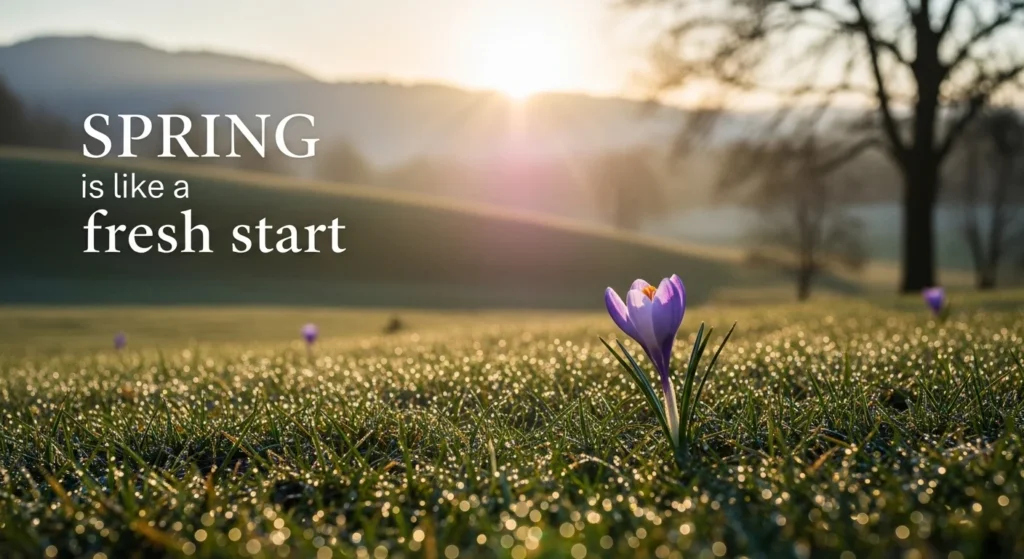
Meaning: A new chance, new energy, and new hope.
Tone: Motivational, optimistic
Best usage: Inspirational writing
Examples:
- After a hard winter, spring felt like a fresh start.
- People cleaned their homes like they were preparing for a new life.
- Spring gave everyone a reason to begin again.
Spring is like a soft whisper
Meaning: Gentle, calm, and soothing.
Tone: Peaceful, quiet
Best usage: Nature and breeze descriptions
Examples:
- The wind in spring moved like a soft whisper through leaves.
- Flowers swayed like they were listening to secrets.
- Spring speaks quietly like a whisper in nature’s ear.
Spring is like a garden of dreams
Meaning: Beautiful, magical, and full of imagination.
Tone: Dreamy, poetic
Best usage: Creative storytelling
Examples:
- Walking through the park felt like entering a garden of dreams.
- Colors blended like scenes from a dream.
- Spring painted dreams across the countryside.
Spring is like a burst of laughter
Meaning: Energetic, joyful, and lively.
Tone: Playful, bright
Best usage: Describing lively scenes
Examples:
- The chirping birds sounded like a burst of laughter.
- Children running outside matched spring’s playful mood.
- The season arrived like laughter after silence.
Spring is like a painter with bright colors
Meaning: It spreads beauty everywhere.
Tone: Artistic, descriptive
Examples:
- Trees bloomed like a painter had touched them.
- Meadows looked decorated by nature’s brush.
- Spring worked like an artist with endless colors.
Spring is like a sweet perfume
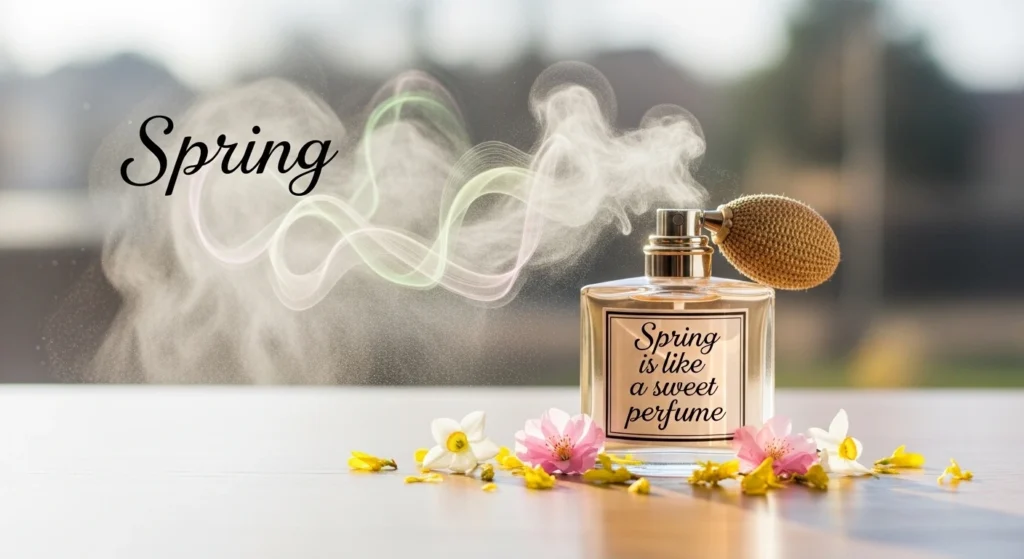
Meaning: Pleasant smells and freshness in the air.
Tone: Sensory, soft
Examples:
- The air smelled like sweet perfume in spring.
- Flowers released scents like a natural fragrance.
- The breeze carried smells like a perfume bottle.
Spring is like a playground for butterflies
Meaning: Active, lively, and colorful.
Tone: Fun, natural
Examples:
- Butterflies danced like children in a playground.
- Gardens turned into playgrounds for insects.
- Spring invited butterflies like guests to a party.
Spring is like sunlight after darkness
Meaning: Hope after difficulty.
Tone: Emotional, inspiring
Examples:
- Spring felt like sunlight after months of gray skies.
- The warmth came like hope after sadness.
- Flowers appeared like light breaking through darkness.
Spring is like a book opening to a new chapter
Meaning: Change, progress, and new beginnings.
Tone: Reflective
Examples:
- The season changed like turning a new page.
- Spring opened life to a fresh chapter.
- Nature began again like a story restarting.
Spring is like a rainbow on the ground
Meaning: Many colors in flowers and fields.
Tone: Visual, bright
Examples:
- The garden looked like a rainbow on the ground.
- Flowers formed colorful patterns like a rainbow.
- Fields shone like rainbow carpets.
Spring is like music for the eyes
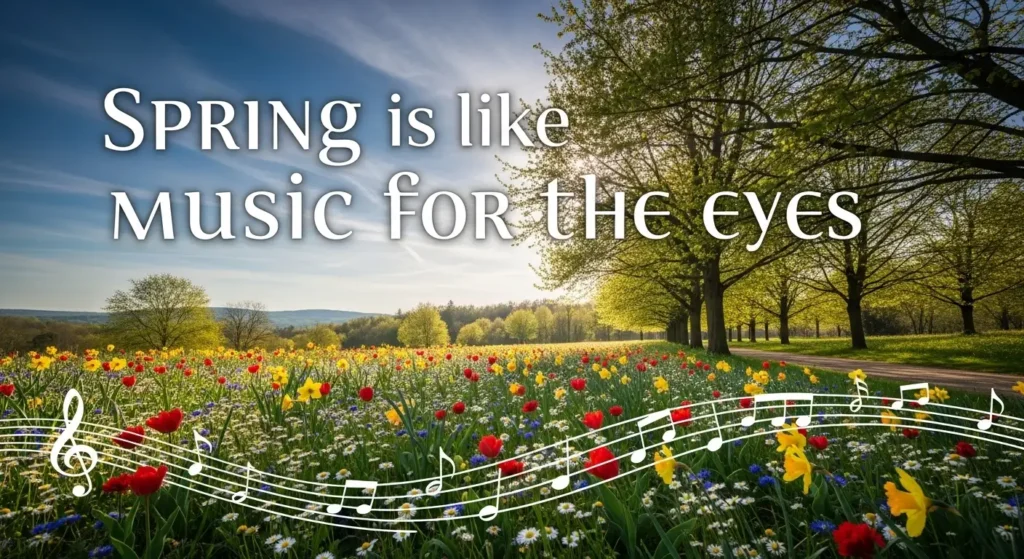
Meaning: Beautiful to look at.
Tone: Poetic
Examples:
- The scenery felt like music for the eyes.
- Colors played like notes in harmony.
- Spring offered a visual melody.
Spring is like a soft blanket of flowers
Meaning: Flowers cover the land gently.
Tone: Cozy, calm
Examples:
- Meadows lay under a blanket of flowers.
- The ground looked covered like a floral quilt.
- Spring tucked the earth under a soft layer of blooms.
Spring is like a happy reunion
Meaning: Nature returns after absence.
Tone: Emotional, warm
Examples:
- Birds returned like friends meeting again.
- Trees welcomed leaves like old companions.
- Spring felt like a reunion after a long separation.
Spring is like a fresh breath of air
Meaning: Clean, refreshing, energizing. Tone: Light, refreshing
Examples:
- Stepping outside felt like taking a fresh breath.
- The breeze refreshed minds like clean air.
- Spring cleared away winter’s heaviness.
Spring is like children laughing in a park
Meaning: Joyful and lively.
Tone: Playful
Examples:
- The atmosphere felt like children laughing freely.
- Nature played like kids on a sunny day.
- Spring echoed with cheerful energy.
Spring is like a hopeful letter
Meaning: Brings good news and positivity.
Tone: Hopeful
Examples:
- Each bloom felt like a letter of hope.
- The season delivered joy like good news.
- Spring arrived like a message of happiness.
Spring is like nature’s celebration
Meaning: A party of life and color.
Tone: Festive
Examples:
- Trees dressed up like they were celebrating.
- Fields glowed like party decorations.
- Spring felt like nature’s festival.
Spring is like a light after a tunnel
Meaning: Relief and positivity after hardship.
Tone: Motivational
Examples:
- Spring appeared like light after a long tunnel.
- Warmth followed cold like relief after struggle.
- The season gave hope like a bright ending.
Spring is like a blooming smile
Meaning: Flowers resemble smiling faces.
Tone: Cheerful
Examples:
- Flowers opened like blooming smiles.
- Gardens greeted visitors like smiling hosts.
- Spring spread smiles across the land.
Spring is like a fresh page in a diary
Meaning: A chance to start anew.
Tone: Reflective
Examples:
- The season felt like writing on a fresh diary page.
- Nature erased old marks like a clean page.
- Spring invited new stories to begin.
Spring is like a dance of petals
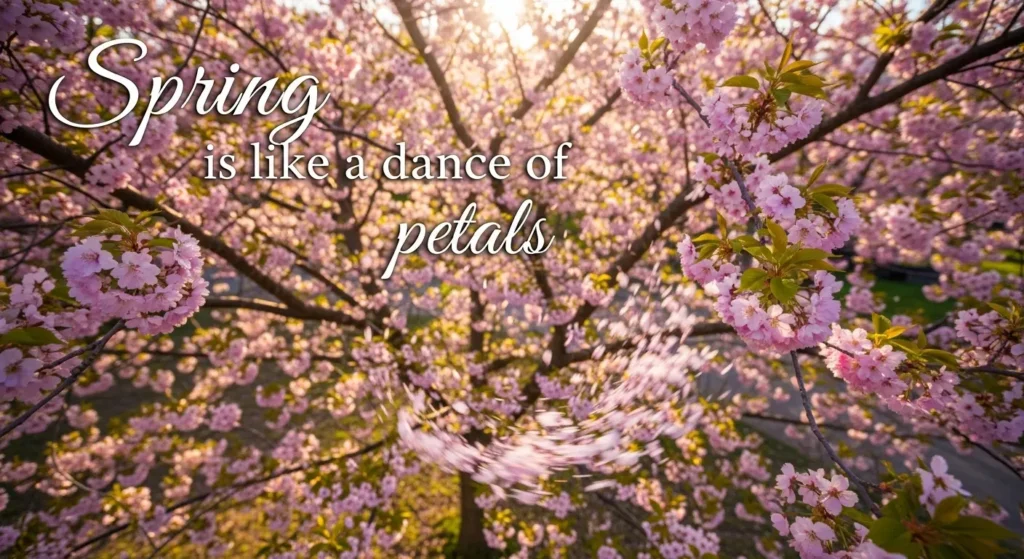
Meaning: Petals falling and moving in the breeze.
Tone: Graceful
Examples:
- Petals floated like dancers in the air.
- Blossoms swirled like performers on stage.
- Spring choreographed a dance of flowers.
Spring is like hope growing on branches
Meaning: Buds symbolize hope.
Tone: Inspirational
Examples:
- Buds appeared like hope on branches.
- Trees showed signs of life like promises.
- Spring grew optimism leaf by leaf.
Spring is like a cup of warm tea
Meaning: Comforting and soothing.
Tone: Cozy
Examples:
- The weather felt comforting like warm tea.
- Sitting in the garden felt peaceful like sipping tea.
- Spring relaxed the mind like a soothing drink.
Spring is like a story waiting to be told
Meaning: Full of possibilities and beauty.
Tone: Imaginative
Examples:
- Every flower looked like part of a story.
- Paths through gardens felt like storylines.
- Spring invited writers to create new tales.
Daily-Use and Texting Examples
You can use these similes in everyday communication:
- “Today’s weather feels like a fresh breath of air — total spring vibes!”
- “The park looks like a rainbow on the ground.”
- “This morning felt like a gentle alarm clock from nature.”
- “Flowers outside are like blooming smiles.”
Why Using Similes for Spring Improves Your Writing
- Makes descriptions vivid and memorable
- Adds emotion and creativity
- Helps readers visualize scenes
- Improves storytelling and poetry
- Enhances SEO with rich, descriptive language
Conclusion
Using similes for spring transforms simple descriptions into colorful, emotional, and imaginative expressions. Whether you are writing poetry, essays, captions, or stories, these similes help you paint spring in the reader’s mind with clarity and beauty. Practice using them in daily writing, and you’ll notice your creativity bloom just like the season itself.
FAQs
What is a simile for spring? A simile for spring compares the season to something else using “like” or “as” to create vivid imagery.
Why are similes useful in writing? They make descriptions clearer, more emotional, and easier to imagine.
Can I use these similes in essays? Yes, they are perfect for essays, poems, and creative writing.
Are similes good for students? Absolutely. They improve vocabulary and writing creativity.
How do similes improve SEO content? They add rich, descriptive language that keeps readers engaged longer.
Can I create my own similes for spring? Yes! Observe nature and compare it creatively to everyday things.
Where can I use similes for spring daily? In texts, captions, school work, storytelling, and social media posts.