

Similes are a popular figure of speech used to compare one thing to another using words like “as” or “like.” They help readers instantly feel an emotion instead of just understanding it. When describing someone or something unfortunate, similes make the situation more vivid, emotional, and relatable.
In daily conversation, storytelling, and creative writing, similes allow us to express bad luck, hardship, or misfortune in a softer yet more powerful way. Instead of saying “He was unlucky,” a simile paints a picture that sticks in the reader’s mind.
Like a Rainstorm on a Wedding Day
Meaning: Something goes wrong at the worst possible time. Tone: Sympathetic, dramatic Best Used When: Describing sudden bad luck that ruins a happy moment.
Examples:
- The power outage hit like a rainstorm on a wedding day.
- His accident came like a rainstorm on a wedding day, spoiling months of planning.
- The news fell on her happiness like a rainstorm on a wedding day.
Daily-use text example:
- “This timing is terrible—feels like a rainstorm on a wedding day 😞”
As Unlucky as a Broken Mirror
Meaning: Extremely unlucky, often repeatedly. Tone: Casual, conversational Best Used When: Talking about ongoing misfortune.
Examples:
- He’s been as unlucky as a broken mirror all year.
- Losing his job after the accident made him as unlucky as a broken mirror.
- That team is as unlucky as a broken mirror this season.
Texting idea:
- “Nothing’s going right today—I’m as unlucky as a broken mirror.”
Like a Boat Lost at Sea
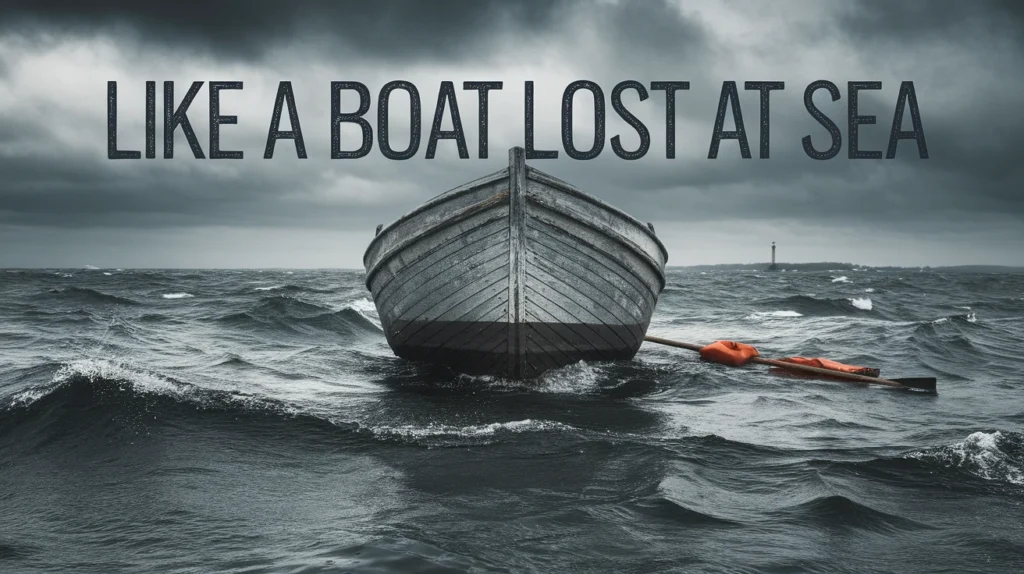
Meaning: Helpless and facing bad circumstances without direction. Tone: Emotional, reflective Best Used When: Describing emotional or life struggles.
Examples:
- After the failure, she felt like a boat lost at sea.
- The unfortunate man wandered like a boat lost at sea.
- Without support, he drifted like a boat lost at sea.
As Fortunate as a Flat Tire on a Highway
Meaning: Ironically unlucky and inconvenient. Tone: Light sarcasm Best Used When: Humorously describing bad luck.
Examples:
- Missing the interview was as fortunate as a flat tire on a highway.
- That delay felt as fortunate as a flat tire on a highway.
- His luck today is as fortunate as a flat tire on a highway.
Like a Shadow That Never Leaves
Meaning: Persistent misfortune that follows someone. Tone: Serious, poetic Best Used When: Describing long-term hardship.
Examples:
- Bad luck followed him like a shadow that never leaves.
- Poverty clung to her like a shadow that never leaves.
- Misfortune stayed like a shadow that never leaves.
As Unfortunate as a Cracked Compass

Meaning: Unable to find the right path due to bad circumstances. Tone: Thoughtful Best Used When: Life decisions, career struggles.
Examples:
- He felt as unfortunate as a cracked compass in life.
- Her plans failed like a cracked compass leading her astray.
- Without guidance, he was as unfortunate as a cracked compass.
Like Losing an Umbrella in a Storm
Meaning: Bad luck combined with lack of protection. Tone: Relatable Best Used When: Sudden problems worsen a situation.
Examples:
- Getting sick before exams was like losing an umbrella in a storm.
- The layoffs hit like losing an umbrella in a storm.
- His support system vanished like an umbrella lost in a storm.
As Hopeless as a Candle in the Wind
Meaning: Fragile situation likely to fail. Tone: Emotional Best Used When: Describing vulnerability.
Examples:
- His job security was as hopeless as a candle in the wind.
- The plan stood like a candle in the wind.
- Their hopes flickered like a candle in the wind.
Like a Puzzle Missing Pieces
Meaning: Something incomplete due to misfortune. Tone: Soft, reflective Best Used When: Emotional or personal loss.
Examples:
- Life felt like a puzzle missing pieces after her loss.
- His story was like a puzzle missing pieces.
- The project ended like a puzzle missing pieces.
As Unfortunate as a Locked Door Without a Key
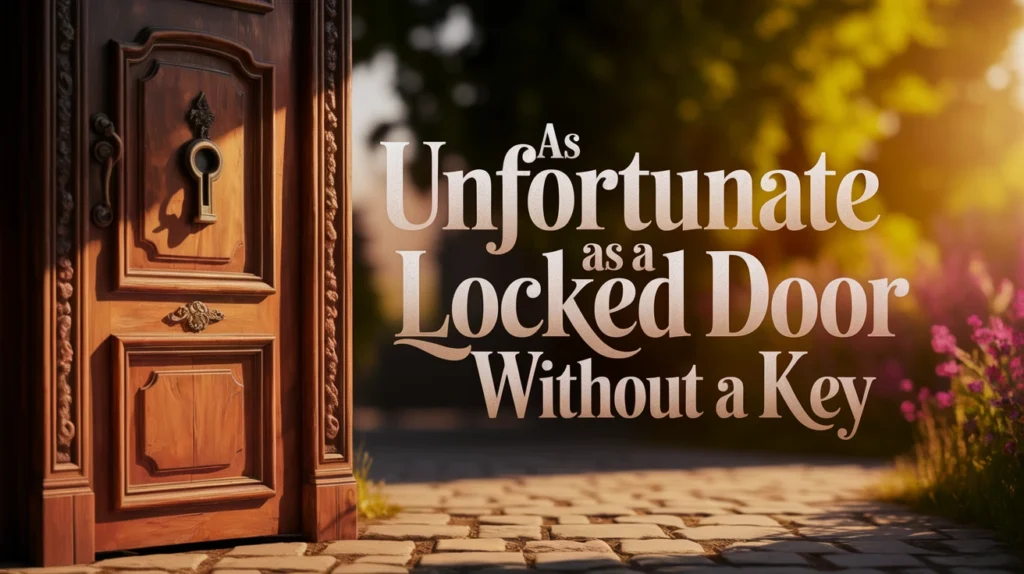
Meaning: Blocked opportunities. Tone: Direct Best Used When: Missed chances.
Examples:
- The visa rejection was like a locked door without a key.
- His career stalled like a locked door without a key.
- Opportunity felt closed like a locked door without a key.
Like a Storm Without Shelter
Meaning: Facing problems alone. Tone: Emotional Best Used When: Isolation and struggle.
Examples:
- He faced bankruptcy like a storm without shelter.
- Her grief hit like a storm without shelter.
- Life attacked him like a storm without shelter.
As Miserable as a Wilting Flower
Meaning: Gradual decline due to hardship. Tone: Gentle, poetic Best Used When: Emotional exhaustion.
Examples:
- He looked as miserable as a wilting flower.
- Her spirit faded like a wilting flower.
- The team morale dropped like a wilting flower.
Like Dice Always Rolling Wrong
Meaning: Repeated bad luck. Tone: Casual Best Used When: Games, chances, fate.
Examples:
- His luck was like dice always rolling wrong.
- Every risk felt like dice rolling wrong.
- Life treated him like dice always rolling wrong.
As Unfortunate as a Missed Last Train
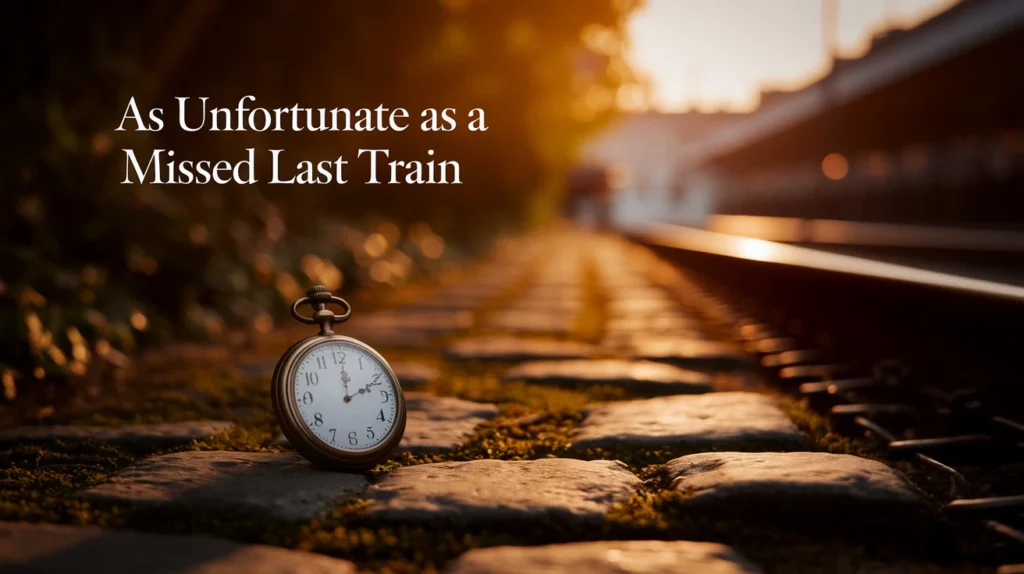
Meaning: A life-changing missed chance. Tone: Regretful Best Used When: Missed opportunities.
Examples:
- The late submission was as unfortunate as a missed last train.
- Losing her scholarship felt like missing the last train.
- His delay was as unfortunate as a missed last train.
Like Carrying a Weight You Can’t Drop
Meaning: Emotional burden caused by hardship. Tone: Deep, emotional Best Used When: Mental or emotional stress.
Examples:
- Debt felt like carrying a weight he couldn’t drop.
- Grief stayed like a weight he couldn’t drop.
- Responsibility became like a weight he couldn’t drop.
Quick Daily-Use Sentences
“My week’s been like dice always rolling wrong.”
- “That timing is like losing an umbrella in a storm.”
- “Honestly, it feels like a locked door without a key.”
Final Thoughts
Using similes for unfortunate situations allows you to express hardship with clarity, emotion, and creativity. Whether you’re writing stories, captions, essays, or everyday messages, these comparisons help your words feel alive and relatable. A well-chosen simile can turn simple writing into memorable expression—making readers feel the misfortune, not just read about it.