
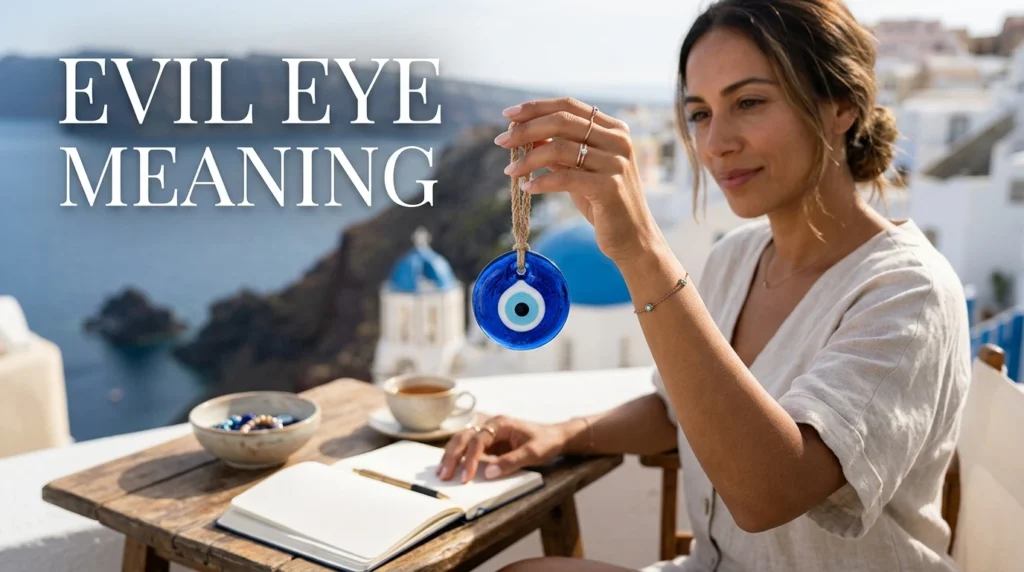
Have you ever seen someone comment “evil eye 🧿” under an Instagram photo or mention the evil eye in a text message? Many people search for evil eye meaning because they notice the symbol online but aren’t sure what it represents.
Unlike many internet abbreviations, the evil eye is not a texting acronym or slang with a full form. Instead, it is an ancient belief and a popular symbol that has found a new life on social media.
Understanding internet expressions is important because online communication changes quickly. While some terms are abbreviations like LOL or BRB, others are symbols, emojis, or cultural references. The evil eye emoji (🧿) is one of them.
In this guide, you’ll learn the true evil eye meaning, how people use it on WhatsApp, Instagram, TikTok, and Snapchat, what it does and does not mean, and how to respond naturally when someone mentions it online.
What Is the Evil Eye Meaning?
The evil eye meaning refers to the belief that a person can unintentionally or intentionally send negative energy, jealousy, or bad luck simply by looking at someone with envy.
In modern online conversations, the phrase usually means:
- Protection from jealousy.
- Avoiding negative energy.
- Wishing away bad luck.
- Guarding personal success from envy.
- Expressing spiritual protection.
Many people pair the phrase with the 🧿 emoji, often called the evil eye emoji.
For example:
Friend 1: I finally bought my dream car! 🚗
Friend 2: Evil eye 🧿 Stay blessed!
Here, the second person is wishing protection rather than warning about danger.
Is Evil Eye a Texting Slang?
Many users wonder whether evil eye is internet slang.
The answer is yes and no.
It is commonly used in texting and social media, but it is not an abbreviation like:
- LOL
- OMG
- BRB
- IDK
Instead, it is a cultural phrase that became part of internet language through emojis and social media trends.
Today, people use evil eye casually to mean:
- Don’t let jealous people ruin your happiness.
- Protect yourself from negativity.
- Stay safe from envy.
Does Evil Eye Have a Full Form?
One of the most searched questions is whether evil eye has a full form.
The answer is simple:
It has no full form.
Unlike abbreviations, evil eye is a complete phrase.
People sometimes mistakenly search for:
- Evil eye full form
- Evil eye abbreviation
- Evil eye acronym
However, none of these are correct because it is not an acronym.
Its meaning comes from ancient beliefs rather than internet shorthand.
Short Meaning of Evil Eye
If you need a quick definition, here it is:
Evil eye means protection against jealousy, envy, or negative energy.
Online, people usually use it as a positive reminder to stay protected from others’ envy.
Origin of the Evil Eye
The concept of the evil eye is thousands of years old.
Many ancient civilizations believed that jealousy could bring bad luck.
The belief appeared in regions including:
- Ancient Greece
- Turkey
- Egypt
- Italy
- The Middle East
- South Asia
- Latin America
Over time, many cultures created blue eye-shaped charms believed to offer protection.
Although beliefs differ, the symbol became recognized worldwide.
Today, people often wear:
- Necklaces
- Bracelets
- Rings
- Home decorations
- Phone charms
as symbols of protection.
How the Evil Eye Became Popular Online
Social media introduced millions of people to the symbol.
Platforms like Instagram and TikTok made the blue eye emoji fashionable.
Influencers started posting:
- New homes 🧿
- New cars 🧿
- Vacation photos 🧿
- Pregnancy announcements 🧿
- Business launches 🧿
The emoji became shorthand for:
“Protect this blessing from jealousy.”
Now even people who don’t follow traditional beliefs use it casually online.
How Is Evil Eye Used in Real Conversations?
Here are natural examples.
Example 1
Alex: I got promoted today!
Sara: Evil eye 🧿 Congratulations!
Example 2
Emma: My baby finally slept through the night.
Lina: Evil eye! Hope it stays that way 🧿
Example 3
Jake: I passed every exam.
Ryan: Evil eye 😂 You’re unstoppable.
Example 4
Anna: Look at this amazing sunset!
Mia: Evil eye 🧿 Beautiful view.
Example 5
Noah: My business is growing so fast.
Friend: Evil eye! Keep winning.
Evil Eye Meaning on WhatsApp
WhatsApp users often send the evil eye emoji after good news.
Common situations include:
- Wedding photos
- New jobs
- New babies
- House purchases
- Vacation pictures
Example:
Mom: We finally moved into our new home.
Daughter: Evil eye 🧿 Congratulations!
The emoji expresses care rather than fear.
Evil Eye Meaning on Instagram
Instagram is where the symbol appears most often.
People comment:
- Evil eye 🧿
- Protected 🧿
- Mashallah 🧿
- Stay blessed 🧿
Influencers often include it in captions to symbolically protect achievements from jealousy.
Evil Eye Meaning on TikTok
TikTok has made the evil eye trendy among Gen Z.
Popular content includes:
- Evil eye jewelry
- Protection rituals
- Spiritual videos
- Lucky charms
- Manifestation content
Many creators use the emoji simply because it looks stylish, while others genuinely believe in its protective meaning.
Evil Eye Meaning on Snapchat
Snapchat users mostly include the emoji:
- After posting selfies.
- During celebrations.
- With travel stories.
- On birthday snaps.
Example:
Caption:
Vacation mode 🧿✈️
The message suggests protecting happy moments from envy.
Evil Eye Emoji Meaning 🧿
The 🧿 emoji represents the traditional blue protective eye.
Online it often means:
- Good luck.
- Protection.
- Positive vibes.
- Stay safe.
- Don’t jinx it.
- Keep negative energy away.
Not everyone using the emoji follows spiritual beliefs.
Many simply like its positive message.
What Evil Eye Does NOT Mean
Many beginners misunderstand the phrase.
It does not always mean:
- Someone cursed you.
- Magic is happening.
- A ghost is nearby.
- Someone literally has evil eyes.
- A medical condition.
In most online conversations, it simply symbolizes protection from envy.
Common Misunderstandings About Evil Eye
Here are some frequent mistakes.
It is not an acronym.
There is no hidden full form.
It is not always religious.
Many people use it culturally or fashionably.
It does not accuse someone.
Commenting “evil eye” usually isn’t calling another person evil.
It isn’t negative.
Ironically, people use the phrase positively to wish protection.
Similar Slang, Symbols, and Expressions
People often use these alongside the evil eye.
- 🧿
- Good vibes only
- Stay blessed
- Manifest it
- Positive energy
- Protect your peace
- Don’t jinx it
- Sending good energy
- Blessed
- Stay safe
These expressions all focus on positivity and protection.
How to Reply When Someone Says Evil Eye
Many people wonder how to respond.
Here are natural replies.
Polite Replies
- Thank you! 🧿
- Appreciate it.
- Thanks for the positive vibes.
- That’s so kind.
- Stay blessed too.
Friendly Replies
- We need all the protection we can get.
- Fingers crossed!
- Hopefully everything stays good.
- Thanks, I appreciate it.
Flirty Replies
If you’re close to the person:
- As long as you’re on my side. 😉
- You protect me then. 🧿
- I’ll take all your good luck.
- You’re my lucky charm.
Boundary-Respecting Replies
If you don’t personally believe in the concept:
- Thank you for thinking of me.
- I appreciate the kind wishes.
- That’s thoughtful of you.
- Thanks for your support.
These responses remain respectful without discussing personal beliefs.
Is Evil Eye Still Popular?
Yes.
The evil eye continues to trend across social media because it combines:
- Fashion
- Culture
- Spiritual symbolism
- Positive messaging
Millions of people wear evil eye jewelry and use the emoji daily.
Although some trends fade, the evil eye has remained popular because of its long cultural history.
Evil Eye in Gen Z Culture
Gen Z often uses the evil eye differently than older generations.
For many young users, it means:
- Protect the vibes.
- Don’t ruin this moment.
- Stay lucky.
- Keep the negativity away.
Some use it seriously.
Others use it playfully.
Many simply enjoy the aesthetic of the emoji.
Tips for Using Evil Eye Correctly Online
When using the phrase:
- Use it after positive news.
- Pair it with the 🧿 emoji.
- Avoid assuming everyone shares the same beliefs.
- Understand that it’s usually supportive.
- Keep the tone friendly.
Examples:
✅ New apartment! 🧿
✅ Finally graduated! 🧿
✅ Dream vacation 🧿
When Should You Avoid Using Evil Eye?
Although common online, avoid using it when:
- Someone may misunderstand your cultural reference.
- Professional emails.
- Formal business communication.
- Serious medical or legal discussions.
Instead, choose simple expressions like:
- Congratulations.
- Best wishes.
- Stay safe.
- Wishing you success.
Evil Eye vs Other Internet Expressions
ExpressionMeaningEvil Eye 🧿Protection from jealousy or negative energy.Don’t Jinx ItAvoid bringing bad luck by talking too soon.Good VibesPositive energy and optimism.BlessedFeeling grateful and fortunate.ManifestHoping positive outcomes become reality.
Although related, each expression has a slightly different purpose.
Evil Eye Meaning Across Different Cultures
Although the evil eye meaning is similar worldwide, different cultures have their own beliefs and traditions about it. In many places, people believe that envy or excessive admiration can attract bad luck. As a result, protective symbols and rituals have developed over centuries.
In Turkish Culture
The blue Nazar Boncuğu is one of the most recognized evil eye symbols. It is commonly displayed in homes, cars, offices, and jewelry to protect against negative energy.
In Greek Culture
Known as Mati, the evil eye is believed to cause misfortune through jealousy. Many Greeks wear blue eye charms or recite prayers for protection.
In Middle Eastern Traditions
The evil eye is widely acknowledged, and people often say blessings after complimenting someone to prevent envy from bringing harm.
In South Asian Culture
Countries like India and Pakistan have long-standing traditions involving the evil eye. Black dots on children, protective charms, and prayers are commonly used to guard against jealousy.
Even though customs differ, the core evil eye meaning remains the same: protecting people from envy and negative intentions.
Why Do People Believe in the Evil Eye?
Belief in the evil eye has survived for thousands of years because many cultures associate jealousy with negative outcomes. While there is no scientific proof that the evil eye causes bad luck, the belief continues because it provides emotional comfort and cultural identity.
People may believe in the evil eye because:
- It encourages humility after success.
- It reminds people to avoid envy.
- It strengthens family traditions.
- It symbolizes hope and protection.
- It offers emotional reassurance during important life events.
Whether viewed as a spiritual belief or a cultural tradition, the evil eye continues to influence millions of people around the world.
Common Situations Where People Mention the Evil Eye
The phrase evil eye often appears after someone shares exciting news online or in person. People use it to wish protection rather than to spread fear.
Some common situations include:
- Buying a new house.
- Getting married.
- Announcing a pregnancy.
- Graduating from school.
- Starting a new business.
- Purchasing a new car.
- Posting vacation pictures.
- Celebrating personal achievements.
- Receiving a promotion.
- Sharing family photos.
In each case, saying “evil eye 🧿” is usually a kind way of wishing someone continued happiness and protection.
Popular Evil Eye Symbols and Their Meanings
The evil eye meaning is often represented through various symbols that people wear or display for protection.
Blue Evil Eye
The most common symbol. It represents protection from jealousy and negative energy.
White Evil Eye
Often associated with purity, peace, and fresh beginnings.
Black Evil Eye
Represents strength, courage, and personal power.
Red Evil Eye
Connected with confidence, passion, and determination.
Green Evil Eye
Symbolizes growth, health, and success.
Purple Evil Eye
Associated with wisdom, imagination, and creativity.
Although colors may have different interpretations, all are linked to protection in one way or another.
Is the Evil Eye Emoji Always Used Seriously?
Not always. The 🧿 emoji has evolved beyond its traditional meaning and is now used in several ways online.
People may use it:
- As a genuine spiritual symbol.
- As a trendy aesthetic emoji.
- To joke with friends.
- To celebrate achievements.
- To express support.
- To avoid “jinxing” good news.
For many younger users, the emoji is simply another way to say, “I hope everything goes well.”
Mistakes to Avoid When Using Evil Eye Online
Although the phrase is popular, using it incorrectly can confuse others.
Avoid these common mistakes:
- Thinking it is an acronym.
- Assuming everyone believes in it spiritually.
- Using it to accuse someone of being jealous.
- Treating it as a medical or scientific concept.
- Using it sarcastically in sensitive conversations.
- Confusing it with other eye emojis like 👀.
Instead, use it positively to show support, encouragement, or protection.
Difference Between Evil Eye, Nazar, and the Blue Eye Emoji
Many people think these terms mean exactly the same thing, but there are small differences.
TermMeaningEvil EyeThe belief that jealousy or envy can bring bad luck.NazarThe protective charm used to guard against the evil eye.🧿 EmojiA digital version of the Nazar symbol used in online conversations.
In simple words, the evil eye is the belief, while the Nazar is the protective symbol people use against it.
The Future of the Evil Eye in Social Media Culture
The evil eye meaning has successfully adapted to the digital age. Instead of remaining a traditional cultural belief, it has become a recognizable symbol across social media platforms.
Experts believe the symbol will continue to remain popular because it:
- Is easy to recognize.
- Has a positive message.
- Works across different languages.
- Fits well with emoji communication.
- Blends fashion, culture, and internet trends.
People Also Ask (FAQ)
What does evil eye mean in text?
In texting, evil eye usually means wishing someone protection from jealousy, envy, or negative energy. People often include the 🧿 emoji to express this idea.
What does the 🧿 emoji mean?
The 🧿 emoji represents the traditional evil eye symbol. It commonly stands for protection, good luck, and keeping away negative energy.
Is evil eye an internet slang term?
It is commonly used in online conversations, but it is not an acronym or abbreviation. It is a cultural phrase that became popular through social media.
Does evil eye have a full form?
No. Evil eye is not a shortened form of anything. It is already a complete phrase.
What does evil eye mean on TikTok?
On TikTok, it often appears in videos about spirituality, fashion, good luck, and protecting success from jealousy.
What does evil eye mean on Instagram?
On Instagram, people use it in captions and comments to symbolically protect happy moments, achievements, or beautiful photos from envy.
Is the evil eye always religious?
No. Some people see it as part of their faith or culture, while others use it only as a symbol of positivity or fashion.
Can I use the evil eye emoji even if I don’t believe in it?
Yes. Many people use the emoji simply as a friendly way to express good wishes or protect positive moments, while respecting that others may attach deeper cultural or spiritual meaning to it.
Conclusion :
The evil eye meaning goes far beyond a simple emoji. While it is not a texting abbreviation or internet acronym, it has become a popular part of online communication through the 🧿 symbol.
In most digital conversations, people use it to express protection, good luck, and support, especially after someone shares happy news or a personal achievement.
Whether you see it on WhatsApp, Instagram, TikTok, or Snapchat, it usually carries a positive message rather than a negative one. By understanding its cultural background, modern online usage, and the best ways to respond, you can confidently recognize and use the evil eye in conversations while respecting the different beliefs and traditions connected to this well-known symbol.