
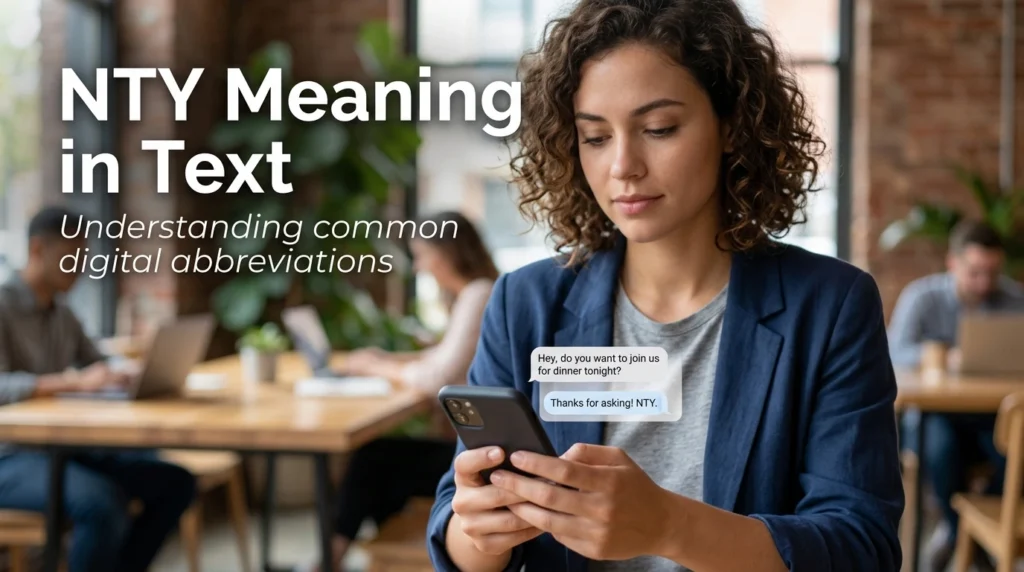
Have you ever received a message saying “NTY” and wondered what it means? You’re not alone. Many people search for nty meaning in text because internet slang changes quickly, and new abbreviations appear every day across social media and messaging apps.
If you’re chatting with friends, scrolling through TikTok comments, or replying to someone on Snapchat, understanding common texting shortcuts helps you avoid confusion and communicate naturally.
The good news is that NTY is one of the easiest abbreviations to understand once you know its meaning. In most online conversations, it is simply a polite way to decline something without sounding rude.
In this guide, you’ll learn the NTY meaning in text, its full form, where it came from, how people use it on different platforms, chat examples, common misunderstandings, similar slang terms, and the best ways to reply when someone sends you NTY.
What Does NTY Mean in Text?
The NTY meaning in text is “No, Thank You.”
People use NTY as a short and polite way to refuse an offer, invitation, suggestion, or request. Instead of typing the full phrase “No, thank you,” they simply write NTY.
It keeps conversations short while still sounding respectful.
For example:
- Friend: Want to grab pizza tonight?
- You: NTY, I’m staying home.
In this example, the person politely declines the invitation without sounding unfriendly.
NTY Full Form and Short Meaning
Full Form
NTY = No, Thank You
Short Meaning
The abbreviation means:
- Politely saying no.
- Declining an invitation.
- Rejecting an offer respectfully.
- Saying you are not interested.
Unlike a simple “No,” NTY feels softer and more polite.
Origin and Rise in Popularity of NTY
Like many texting abbreviations, NTY became popular because people wanted faster ways to type messages.
As texting became common on mobile phones, users shortened everyday phrases into quick acronyms.
Examples include:
- TY = Thank You
- NP = No Problem
- IDC = I Don’t Care
- IMO = In My Opinion
- NTY = No, Thank You
Today, NTY appears across:
- Text messages
- Instagram DMs
- Snapchat
- TikTok comments
- Discord
- Online games
Its popularity continues because it is short, polite, and easy to understand.
How Is NTY Used in Online Chats?
People usually send NTY when they want to refuse something politely.
Common situations include:
- Declining invitations.
- Turning down offers.
- Refusing requests.
- Rejecting recommendations.
- Saying no to purchases.
Example 1
Alex: Want some coffee?
Jordan: NTY!
Example 2
Friend: Let’s go shopping.
You: NTY, maybe another day.
Example 3
Coworker: Need help?
You: NTY, I’ve got it covered.
Example 4
Seller: Interested in buying this?
Customer: NTY.
Chat Examples Using NTY Naturally
Here are some realistic conversations.
Example One
Emma: Want to join our movie night?
Liam: NTY, I already have plans.
Example Two
Friend: Want another slice of cake?
You: NTY, I’m full.
Example Three
Classmate: Can you join our study group?
You: NTY, I study better alone.
Example Four
Sibling: Want to play video games?
You: NTY, I’m tired today.
Example Five
Friend: Want to try sushi?
You: NTY, maybe next time.
NTY Meaning on WhatsApp
On WhatsApp, NTY usually appears in casual conversations between friends or family.
People use it to politely refuse invitations without typing a long sentence.
Examples include:
- NTY, I’m busy today.
- NTY, maybe tomorrow.
- NTY, I already ate.
- NTY, I appreciate it though.
It keeps chats friendly and respectful.
NTY Meaning on Instagram
Instagram users often use NTY in:
- Direct Messages
- Story replies
- Comments
Examples:
Someone: Follow for follow?
Reply: NTY.
Someone: Buy my course?
Reply: NTY.
Someone: Join my live?
Reply: NTY, thanks.
It politely ends the conversation.
NTY Meaning on TikTok
The NTY meaning on TikTok is exactly the same.
TikTok users write it in:
- Video comments
- Replies
- Direct messages
Example:
Comment:
“You should try this challenge!”
Reply:
“NTY 😂”
It politely says no while keeping the interaction casual.
NTY Meaning on Snapchat
Snapchat conversations move quickly, so abbreviations are very common.
Someone might send:
“Want to start a streak?”
Reply:
“NTY.”
Or:
“Come hang out.”
Reply:
“NTY, maybe later.”
The message stays polite without needing a long explanation.
Different Situations Where People Use NTY
People use NTY in many situations.
Declining Invitations
- NTY, I can’t make it.
Refusing Food
- NTY, I’m not hungry.
Rejecting Purchases
- NTY, not interested.
Turning Down Suggestions
- NTY, I’ll do something else.
Ending Sales Messages
- NTY, thanks anyway.
Is NTY Rude?
No.
In most situations, NTY is considered polite.
It is actually kinder than replying with only:
- No
- Nope
- Nah
Adding “thank you” makes the refusal sound respectful.
However, tone still matters.
Sending only “NTY” repeatedly without context may feel a little cold.
Adding something like:
- NTY, thanks!
- NTY, maybe next time.
- NTY, I appreciate the offer.
sounds much warmer.
What NTY Does Not Mean
Many people misunderstand this abbreviation.
Here are some incorrect interpretations.
NTY does not mean:
- Not Today
- Next Time Yes
- Need To Yell
- Nice To You
- Never Trust You
- New This Year
In texting, the most common meaning is simply:
No, Thank You.
Always consider the conversation before assuming another meaning.
Other Meanings of NTY Outside Texting
Although No, Thank You is the most common internet slang meaning, NTY may represent different things in professional or technical settings.
Examples include:
- Company abbreviations.
- Internal project names.
- Business codes.
- Product labels.
- Personal initials.
These meanings depend entirely on context.
If someone writes:
“NTY”
during a casual chat, they almost always mean:
No, Thank You.
How to Reply When Someone Says NTY
There are many respectful ways to respond.
Polite Replies
- No worries.
- Thanks for letting me know.
- That’s completely fine.
- Maybe another time.
- I understand.
- Appreciate the reply.
- Have a great day.
- Thanks anyway.
Friendly Replies
- Maybe next weekend!
- That’s okay.
- We can do something else.
- Catch you later.
- Let me know if you change your mind.
Flirty Replies
If you’re flirting respectfully, you might reply:
- Maybe I’ll win you over next time 😉
- Worth asking anyway.
- I’ll keep trying… just kidding.
- Maybe another date.
Keep the tone playful and respectful.
Boundary-Respecting Replies
Respecting someone’s decision is important.
Examples:
- Thanks for being honest.
- I respect that.
- Totally understandable.
- I won’t pressure you.
- Take care.
These responses help keep conversations comfortable.
Common Mistakes People Make About NTY
Many beginners misunderstand the abbreviation.
Here are some common mistakes.
Thinking It Is Rude
It usually isn’t.
Assuming It Means “Not Today”
This is incorrect in most chats.
Confusing It With TY
TY means Thank You.
NTY means No, Thank You.
Ignoring Context
Always read the surrounding conversation before deciding what NTY means.
Is NTY Still Popular?
Yes.
Although internet slang changes constantly, NTY remains widely used.
People like it because it is:
- Short.
- Polite.
- Easy to understand.
- Quick to type.
- Universally recognized.
It continues to appear across messaging apps and social media platforms.
NTY in Gen-Z Slang Culture
Gen-Z prefers short messages.
Instead of writing:
“No thank you, but I appreciate your offer.”
they often type:
“NTY.”
This style matches today’s fast-moving conversations.
Other Gen-Z abbreviations include:
- FR
- NGL
- IMO
- TBH
- FYP
- W
- L
- ICYMI
NTY fits naturally into this texting style because it saves time while remaining polite.
When Should You Use NTY?
You can safely use NTY when:
- Declining invitations.
- Saying no politely.
- Rejecting offers.
- Refusing products.
- Turning down requests.
- Responding quickly to friends.
Avoid using it in very formal emails or professional business communication where writing the full phrase “No, thank you” is more appropriate.
Tips for Using NTY Naturally
Here are some simple tips.
- Use it with friends and family.
- Add an emoji if the conversation is casual.
- Include a short explanation if needed.
- Stay polite.
- Respect the other person’s feelings.
Examples:
- NTY 😊
- NTY, maybe next time.
- NTY, but thanks for asking.
- NTY, I appreciate it.
These replies sound warm and friendly.
Why Understanding Internet Slang Matters
Learning abbreviations like NTY helps you:
- Read conversations faster.
- Avoid misunderstandings.
- Communicate naturally.
- Understand social media comments.
- Join online communities with confidence.
- Keep up with modern texting culture.
The more internet slang you know, the easier online communication becomes.
Why People Prefer Using NTY Instead of Typing “No, Thank You”
The popularity of NTY comes from its simplicity and convenience. In today’s fast-paced digital world, people often choose abbreviations to save time while still being polite. Instead of typing the full phrase “No, thank you,” they can send three letters that communicate the same respectful message.
Using NTY also helps keep conversations short without sounding harsh. Whether someone is declining an invitation, refusing a product recommendation, or turning down a favor, NTY allows them to say no in a friendly way.
People commonly use NTY because it:
- Saves typing time.
- Sounds more polite than simply saying “No.”
- Fits naturally into quick chats.
- Works across multiple social media platforms.
- Is widely understood by internet users.
- Helps avoid awkward conversations.
- Makes text messages look clean and concise.
As digital communication continues to grow, short abbreviations like NTY remain a popular choice for both teens and adults.
When You Should Avoid Using NTY
Although NTY is useful in casual conversations, it is not appropriate in every situation. Because it is internet slang, some people may not recognize the abbreviation, especially in formal or professional settings.
For important communication, writing the complete phrase “No, thank you” sounds more respectful and professional.
Avoid using NTY in situations such as:
- Business emails.
- Job interviews.
- College applications.
- Customer service conversations.
- Formal work chats.
- Messages to teachers or professors.
- Legal or official communication.
Instead, write responses like:
- No, thank you. I appreciate the offer.
- Thank you, but I’ll have to decline.
- I appreciate your invitation, but I can’t attend.
Choosing the right wording for the situation helps create a positive impression.
NTY vs No Thanks: What’s the Difference?
Many people wonder whether NTY and “No thanks” mean the same thing. While both express a polite refusal, there are slight differences in tone and usage.
NTY is an abbreviation mostly used in texting, social media, and casual online conversations. It feels modern, informal, and quick.
No thanks is the complete phrase written in regular English. It works well in both spoken conversations and written messages.
NTY
- Internet slang.
- Very short.
- Common among younger users.
- Best for texting.
- Informal.
No Thanks
- Full English phrase.
- Suitable for speaking.
- More natural in formal writing.
- Understood by everyone.
- Slightly more personal.
Both communicate the same idea, but choosing between them depends on the conversation.
Emotional Tone Behind NTY in Online Conversations
The meaning of NTY stays the same, but its emotional tone can change depending on the context.
Sometimes NTY sounds warm and appreciative.
Example:
Friend: Want to come over?
You: NTY! Thanks for inviting me 😊
Other times it may sound more direct.
Example:
Seller: Interested in buying this?
Customer: NTY.
Adding a short explanation or emoji often makes the message feel friendlier.
Examples include:
- NTY, maybe next time.
- NTY 😊
- NTY, I appreciate it.
- NTY, but thanks anyway.
- NTY! Have fun.
A little extra kindness helps avoid misunderstandings in text messages.
Examples of NTY in Everyday Situations
Here are some common situations where people naturally use NTY.
Declining Food
Friend: Want another cookie?
You: NTY, I’m full.
Refusing an Invitation
Friend: Want to watch a movie?
You: NTY, I’m busy tonight.
Declining a Game Request
Friend: Join our gaming squad?
You: NTY, maybe tomorrow.
Rejecting an Online Offer
Seller: Interested in this discount?
You: NTY.
Turning Down Advice
Friend: You should download this app.
You: NTY, I already use another one.
These examples show that NTY fits many everyday conversations without sounding rude.
Common Internet Slang Often Used Alongside NTY
If you frequently chat online, you’ll often see NTY together with other popular abbreviations. Learning these makes texting much easier.
Some common examples include:
- TY – Thank You.
- YW – You’re Welcome.
- NP – No Problem.
- NVM – Never Mind.
- IDC – I Don’t Care.
- IDK – I Don’t Know.
- TBH – To Be Honest.
- IMO – In My Opinion.
- BRB – Be Right Back.
- TTYL – Talk To You Later.
- FR – For Real.
- NGL – Not Gonna Lie.
Understanding these abbreviations helps you follow conversations across different platforms.
How Parents and Beginners Can Understand NTY
Internet slang can sometimes confuse parents, teachers, and people who are new to texting. Fortunately, NTY is one of the easiest abbreviations to remember.
Think of it this way:
- N = No.
- T = Thank.
- Y = You.
Together they simply mean No, Thank You.
If you receive NTY in a message, it usually means the other person is politely declining your offer—not trying to offend you.
Parents who understand abbreviations like NTY can better follow conversations with their children and recognize the friendly tone behind many modern text messages.
The Future of NTY in Internet Slang
Internet slang changes every year, but some abbreviations stay popular because they are simple and useful. NTY is likely to remain part of online communication since people will always need a quick and polite way to decline offers.
Even as new Gen-Z and Gen Alpha slang appears, NTY continues to work because it is:
- Easy to remember.
- Easy to type.
- Universally polite.
- Understood across many platforms.
- Useful in everyday conversations.
FAQs :
What does NTY mean in text?
NTY means “No, Thank You.” It is a polite way to decline an offer, invitation, or request.
What is the full form of NTY?
The full form of NTY is No, Thank You.
What does NTY mean on TikTok?
On TikTok, NTY has the same meaning: No, Thank You. Users often write it in comments and replies to politely refuse suggestions or offers.
Is NTY rude?
No. NTY is generally considered a polite abbreviation because it includes “thank you” while declining something.
Can I use NTY on WhatsApp?
Yes. NTY is commonly used on WhatsApp when politely turning down invitations, requests, or offers.
Does NTY mean “Not Today”?
Usually, no. In most texting conversations, NTY stands for No, Thank You, not “Not Today.”
Is NTY popular among Gen Z?
Yes. Many Gen-Z users prefer short abbreviations, and NTY remains a common way to politely say no in digital conversations.
Conclusion :
Understanding the nty meaning in text makes online conversations much easier. In almost every casual chat, NTY stands for “No, Thank You,” offering a quick and respectful way to decline an invitation, offer, request, or suggestion. Whether you see it on WhatsApp, Instagram, TikTok, Snapchat, or in regular text messages, the meaning stays the same in most situations.
By learning how NTY is used, recognizing its common context, avoiding incorrect interpretations, and knowing how to respond politely, you can communicate more confidently in today’s digital world.
As internet slang continues to evolve, simple abbreviations like NTY remain useful because they save time while keeping conversations friendly, respectful, and easy to understand.