
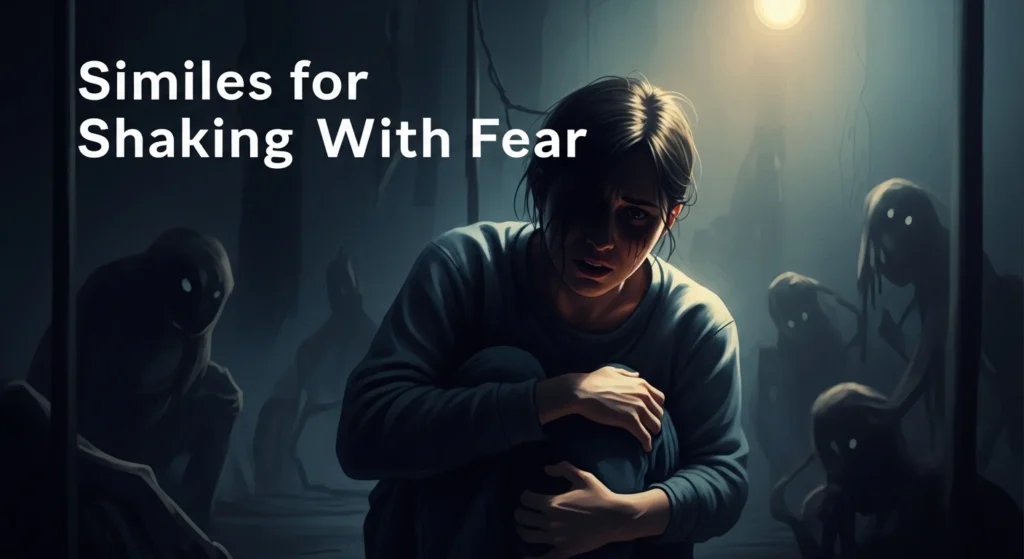
Fear is one of the strongest emotions people experience, and sometimes ordinary words are not enough to describe it. That is where similes for shaking with fear become useful. These creative comparisons help writers, students, and storytellers paint a vivid picture of someone trembling because of fright, anxiety, or shock.
If you are writing a story, improving your English, or looking for expressive phrases, the right simile can make your writing more engaging and memorable.
In this guide, you will discover a collection of similes for shaking with fear along with their meanings and practical examples. From classic comparisons to fresh and imaginative expressions, these similes will help you describe fearful moments with greater emotion and clarity.
By learning these powerful figures of speech, you can enrich your vocabulary, strengthen your writing, and make every scene feel more realistic and impactful.
Shaking Like a Leaf in the Wind
Meaning: This simile describes uncontrollable trembling caused by intense fear or nervousness.
Tone: Vivid, expressive, slightly poetic
Best Usage Context: Creative writing, storytelling, descriptive essays
Example Sentences:
- He stood outside the principal’s office, shaking like a leaf in the wind.
- As the thunder cracked, the child shook like a leaf in the wind.
- She was shaking like a leaf in the wind during her first public speech.
Daily-Use / Texting Examples:
- “I was shaking like a leaf before the interview 😰”
- “Why am I shaking like a leaf right now?”
Trembling Like a Chilled Puppy
Meaning: Compares fear-based shaking to a small, helpless animal that feels unsafe.
Tone: Sympathetic, emotional, gentle
Best Usage Context: Emotional scenes, empathetic writing, narratives
Example Sentences:
- He sat in the corner, trembling like a chilled puppy.
- The girl trembled like a chilled puppy when she heard the noise.
- She felt exposed, trembling like a chilled puppy in the dark.
Daily-Use Examples:
- “I felt so scared, like a chilled puppy.”
- “That movie had me trembling like a puppy!”
Shaking Like Jelly

Meaning: Describes weak, unstable shaking caused by fear or shock.
Tone: Light, informal, relatable
Best Usage Context: Casual writing, storytelling, spoken English
Example Sentences:
- His knees were shaking like jelly as he walked onto the stage.
- After the accident, she was shaking like jelly.
- I felt my legs shaking like jelly when my name was called.
Texting Examples:
- “My legs are shaking like jelly rn 😵💫”
- “I was so scared—total jelly mode.”
Quivering Like a Rabbit Cornered by a Fox
Meaning: Shows intense fear caused by danger or threat.
Tone: Dramatic, visual, intense
Best Usage Context: Fiction, suspense writing, dramatic scenes
Example Sentences:
- He stood frozen, quivering like a rabbit cornered by a fox.
- She felt hunted, quivering like a rabbit facing danger.
- The accused man quivered like a rabbit under questioning.
Shaking Like a Loose Window in a Storm
Meaning: Describes violent, continuous shaking from overwhelming fear.
Tone: Strong, descriptive, cinematic
Best Usage Context: Descriptive prose, novels, vivid narration
Example Sentences:
- His whole body was shaking like a loose window in a storm.
- She shook uncontrollably, like a loose window battered by wind.
- Fear made him shake like an old window during a stormy night.
Trembling Like a Candle in the Wind
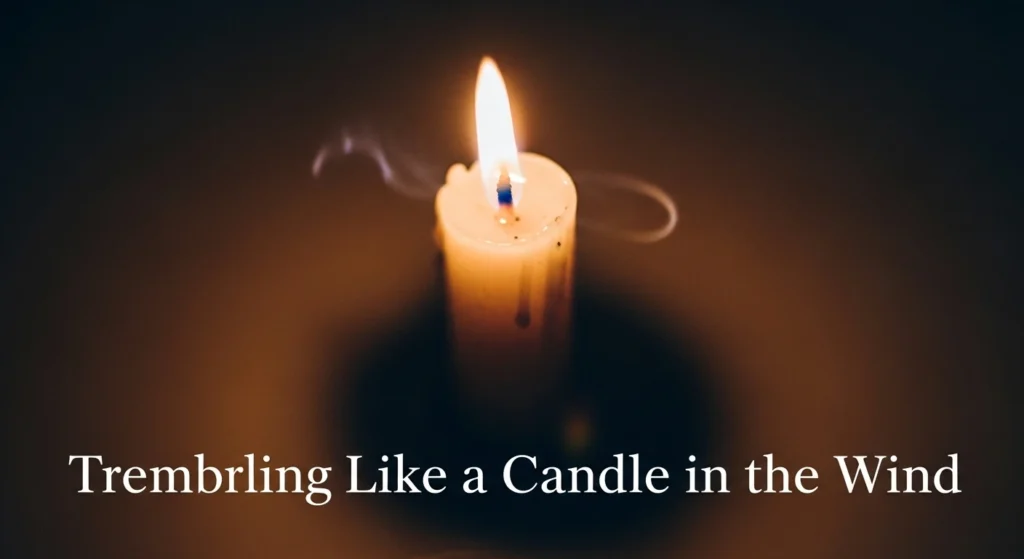
Meaning: Suggests fragile, delicate shaking caused by fear or anxiety.
Tone: Poetic, soft, emotional
Best Usage Context: Poetry, emotional writing, reflective prose
Example Sentences:
- Her voice trembled like a candle in the wind.
- He stood trembling like a candle in the wind, unsure what to do.
- She felt exposed, trembling like a candle flickering in fear.
Shaking Like a Drumskin Under Heavy Beats
Meaning: Represents deep, rhythmic shaking from internal fear.
Tone: Intense, metaphorical, rhythmic
Best Usage Context: Creative writing, dramatic descriptions
Example Sentences:
- His chest shook like a drumskin under heavy beats.
- Fear made his hands shake like a drumskin being struck.
- She felt her body vibrating like a drumskin under pressure.
Quaking Like the Ground Before an Earthquake
Meaning: Suggests fear so strong it feels uncontrollable and powerful.
Tone: Dramatic, serious
Best Usage Context: High-stakes scenes, intense storytelling
Example Sentences:
- His legs were quaking like the ground before an earthquake.
- She felt herself quaking, like the earth about to split.
- Fear made him quiver like land before disaster.
Shaking Like a Bird Trapped in a Cage

Meaning: Conveys fear mixed with helplessness and panic.
Tone: Emotional, symbolic
Best Usage Context: Narratives, emotional essays
Example Sentences:
- She shook like a bird trapped in a cage.
- His fear made him tremble like a caged bird.
- The child was shaking like a trapped bird.
Trembling Like a Phone on Silent Mode
Meaning: Modern simile showing subtle but constant shaking.
Tone: Contemporary, creative, relatable
Best Usage Context: Modern writing, youth-focused content
Example Sentences:
- My hands were trembling like a phone on silent mode.
- He sat there, trembling like a buzzing phone.
- Fear made her fingers shake nonstop.
Texting Examples:
- “Hands trembling like my phone 😬”
- “I’m literally vibrating with fear.”
Shaking Like Ice About to Crack
Meaning: Suggests fear pushing someone to their breaking point.
Tone: Tense, suspenseful
Best Usage Context: Psychological writing, thrillers
Example Sentences:
- He was shaking like ice about to crack.
- Her calm surface hid shaking fear beneath.
- Fear made him fragile, like cracking ice.
Quivering Like a Flag in a Strong Wind
Meaning: Shows visible, uncontrollable shaking.
Tone: Clear, visual
Best Usage Context: Descriptive essays, narratives
Example Sentences:
- His hands quivered like a flag in strong wind.
- She stood there, shaking like a flag in a storm.
- Fear made his body flutter uncontrollably.
Shaking Like a Child Lost in a Crowd
Meaning: Expresses fear mixed with confusion and vulnerability.
Tone: Emotional, empathetic
Best Usage Context: Emotional writing, storytelling
Example Sentences:
- He shook like a child lost in a crowd.
- She felt small, shaking with fear and confusion.
- Fear wrapped around him like loneliness.
Trembling Like Frostbitten Fingers
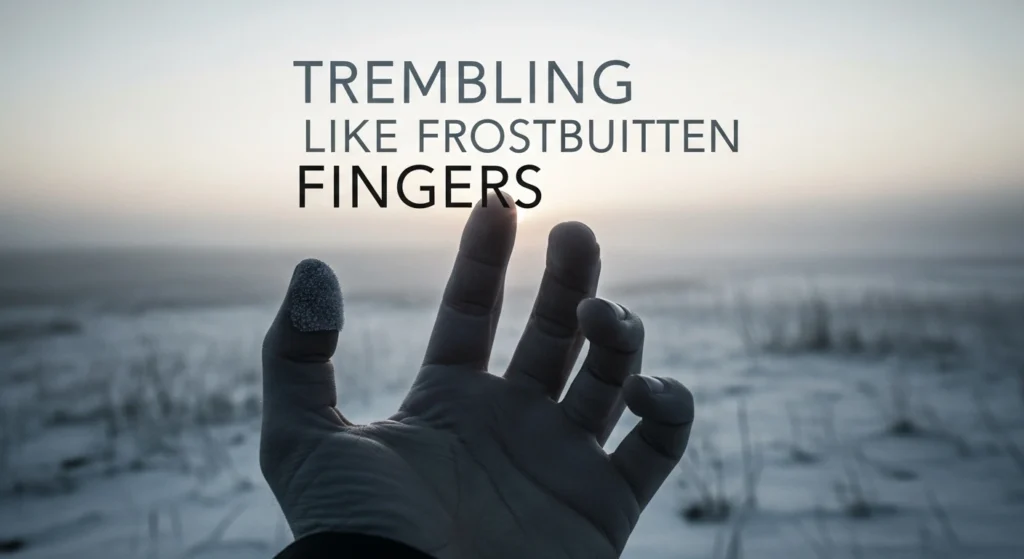
Meaning: Describes stiff, painful trembling from fear.
Tone: Sharp, physical
Best Usage Context: Descriptive prose
Example Sentences:
- His hands trembled like frostbitten fingers.
- Fear made her body stiff and shaking.
- He couldn’t stop trembling.
Shaking Like a Shadow in Flickering Light
Meaning: Suggests nervous, subtle, psychological fear.
Tone: Moody, atmospheric
Best Usage Context: Horror, suspense, reflective writing
Example Sentences:
- She was shaking like a shadow in flickering light.
- Fear moved through him quietly.
- He trembled, barely noticeable but intense.
Quick Daily-Use Sentences
- “I was shaking with fear before my exam.”
- “He stood there, trembling nonstop.”
- “That noise had me shaking badly.”
Similes for Fear
Similes for fear are powerful figures of speech that compare the feeling of fear to something familiar by using the words like or as. They help readers clearly picture a person’s emotional or physical reaction during frightening situations, making writing more vivid, engaging, and memorable. Instead of simply saying someone was scared, a well-chosen simile paints a stronger image, allowing readers to feel the tension, panic, or nervousness alongside the character.
For example, saying someone was shaking like a leaf or as still as a statue creates a much more expressive description than using the word afraid alone.
FAQs :
What are similes for shaking with fear?
Similes for shaking with fear are comparisons that describe how someone trembles because of fear or anxiety. They usually use the words like or as to create vivid and memorable images.
Why should I use similes for shaking with fear in my writing?
Using similes makes your writing more descriptive and engaging. They help readers imagine a character’s emotions and reactions more clearly.
What is an example of a simile for shaking with fear?
A common example is He was shaking like a leaf in the wind. This simile compares a frightened person’s trembling to a leaf moving in the breeze.
Are similes for shaking with fear suitable for students?
Yes. These similes are excellent for students, teachers, and anyone learning English. They improve creative writing, storytelling, and everyday vocabulary.
What is the difference between a simile and a metaphor?
A simile compares two different things using like or as, while a metaphor makes a direct comparison without using those words.
Can I use similes for shaking with fear in stories and essays?
Absolutely. They work well in stories, essays, speeches, poems, and creative writing because they add emotion and make descriptions more realistic.
How can I create my own similes for shaking with fear?
Think of something that naturally trembles or moves, such as a leaf, a candle flame, or jelly, and compare it to a person’s reaction using like or as.
What are the most common similes for shaking with fear?
Some popular examples include:
- Shaking like a leaf.
- Shaking like a frightened rabbit.
- Shaking like jelly.
- Shaking as if standing in a snowstorm.
- Shaking like a candle flame in the wind.
Can similes for shaking with fear improve SEO content?
Yes. Including relevant similes, examples, and explanations helps create comprehensive, user-focused content that satisfies search intent and can improve search engine visibility.
Where can I use similes for shaking with fear?
You can use them in novels, short stories, school assignments, blog posts, speeches, social media captions, scripts, and any form of creative or descriptive writing.
Conclusion:
Using similes for shaking with fear transforms simple descriptions into powerful imagery. They help readers visualize emotions, connect deeply with characters, and feel the intensity of a moment. Whether you’re writing a story, improving an essay, or just expressing yourself better, similes add color, clarity, and creativity.